Commercial LED Lighting Installation in Plano, TX: How to Choose Installers & What a Professional Project Looks Like
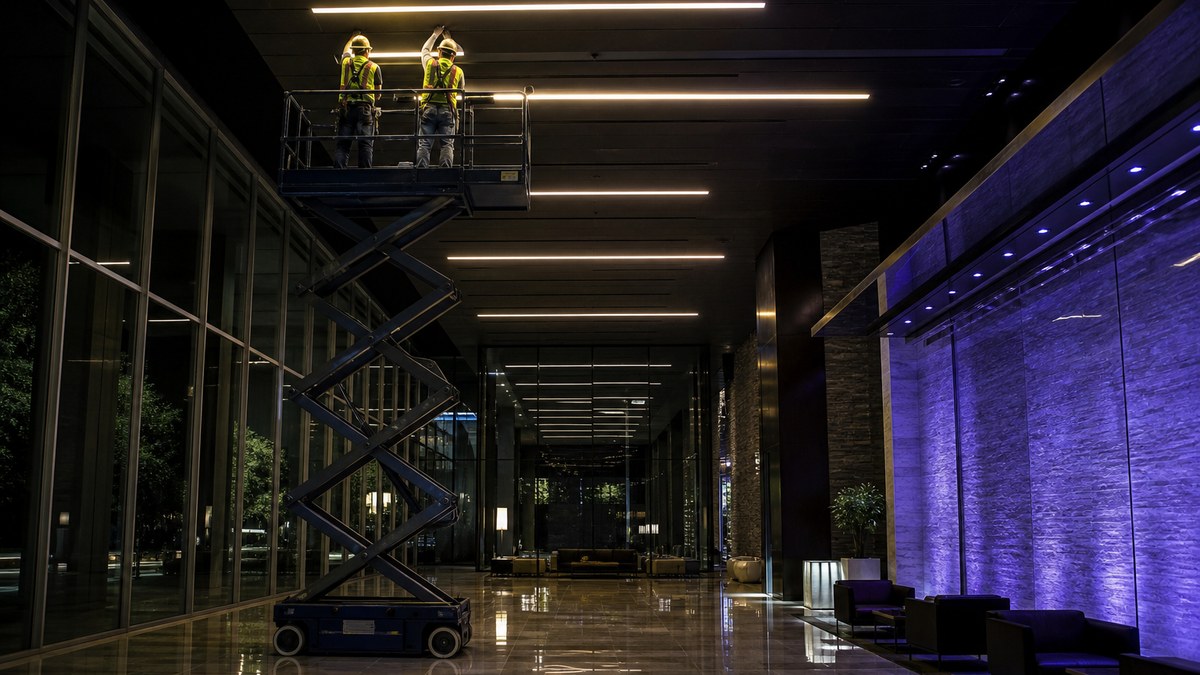
Commercial LED lighting installation in Plano is much more than swapping old tubes for new ones. A good installation starts with a survey of what is on your ceilings and poles today, continues through fixture selection, controls, permits and scheduling, and ends with commissioning and documentation your facility team can actually use. The installer you choose decides whether the result looks consistent, meets code, and keeps working for years, or turns into a patchwork of mismatched color, buzzing drivers and sensors that switch lights off on people.
This guide is for building owners, property managers, facility directors and business owners in Plano, Legacy, Granite Park and the rest of Collin County. It explains the main types of commercial LED installation, what a professional project looks like step by step, how to compare commercial LED lighting installers and contractors, and the questions that separate a careful team from a crew that just hangs fixtures.
A professional commercial LED lighting installation in Plano follows a clear sequence: site survey, lighting design, fixture and controls selection, permits, phased installation around your business hours, commissioning, and closeout documentation.
- Installation types: lamp-and-driver retrofit, retrofit kits, full fixture replacement, new construction and tenant finish-out
- Who should install: a team with Texas-licensed electricians, commercial experience and lift and after-hours capability
- Controls: occupancy, daylight and scheduling controls are often required by the energy code on new work and major alterations
- Permits: most commercial electrical work in Plano needs a city permit; your contractor should pull it
- Disruption: phased, after-hours or weekend work keeps offices, stores and warehouses running
- Incentives: projects may qualify for Oncor energy-efficiency programs, depending on program availability
- Pricing: a project-specific proposal after a walkthrough
What commercial LED installation actually includes
When owners search for "commercial LED lighting installers," they are usually looking for one of five kinds of work. Knowing which one fits your building is the first step to getting comparable proposals.
1. Lamp and driver retrofits
The simplest approach replaces fluorescent tubes or HID lamps with LED lamps inside the existing fixture. Some LED tubes work with the existing ballast, some bypass it and run on line voltage, and some use an external driver. Each has trade-offs. Ballast-compatible lamps are quick but still depend on aging ballasts. Ballast-bypass lamps remove that weak point but require rewiring the sockets and correct labeling so future maintenance staff know what they are dealing with. This route keeps the existing housings, lenses and appearance.
2. Retrofit kits
Retrofit kits replace the internals of an existing troffer or high bay with a new LED board, driver and lens while keeping the housing in the ceiling. The result looks and performs much like a new fixture, avoids ceiling-tile damage and debris, and is faster to install than full replacement. Kits are a strong option for offices, schools, medical buildings and retail spaces with sound housings.
3. Full fixture replacement
When housings are damaged, yellowed, poorly placed or simply the wrong style, replacing the entire fixture is the cleanest answer. It is also the best time to improve the layout, upgrade optics, add integrated sensors, change the color temperature and correct glare problems. Parking lot poles, wall packs, canopy lights, warehouse high bays and architectural fixtures are most often fully replaced.
4. New construction and tenant finish-out
For new buildings and interior finish-outs, lighting is designed from scratch alongside the architect, engineer and general contractor. Plano's office and mixed-use districts see a steady stream of second-generation office and retail finish-outs, and lighting has to meet the energy code, the landlord's building standard and the tenant's brand at the same time.
5. Exterior, site and architectural lighting
Parking lots, garages, canopies, facades, landscape lighting and signs bring their own requirements: pole heights and lifts, wind loads on new heads, full-cutoff optics to avoid light trespass onto neighboring properties, photocells and astronomical time clocks, and work around traffic and open businesses.
| Installation type | Best for | Main trade-off |
|---|---|---|
| LED lamp, ballast-compatible | Quick interim upgrades in good fixtures | Still relies on the old ballast |
| LED lamp, ballast-bypass | Removing ballast failures from the equation | Rewiring and clear labeling required |
| Retrofit kit | Sound troffers and high bays; occupied buildings | Layout and spacing stay the same |
| Full fixture replacement | Damaged, outdated or poorly laid-out fixtures | More labor and ceiling work |
| New design (construction / finish-out) | New spaces, major remodels | Requires full design and coordination |
| Exterior and site replacement | Parking, canopies, facades, wall packs | Lifts, access and traffic control |
Many projects mix these approaches: retrofit kits in the offices, new high bays in the warehouse, and full replacement of parking poles and wall packs outside. A good installer will recommend the right method for each area instead of one answer for the whole building.
The professional installation process, step by step
Whatever the size of the job, a well-run commercial LED project in Plano follows the same basic sequence. If a contractor skips steps, the problems usually show up later as inconsistent light, nuisance sensor behavior, failed inspections or change orders.
Step 1: Site survey and fixture inventory
The installer walks the building, ideally both during the day and after dark for exterior lighting, and records every fixture type, mounting height, lamp type, wattage, ceiling type, circuit, switch and existing control. They note failed or flickering fixtures, color mismatches, glare complaints, dark spots, and areas where the space has changed since the original lighting was installed, such as a warehouse that became an assembly area or an open office that became a set of conference rooms.
Step 2: Goals and lighting design
Before anyone picks a fixture, the team should agree on goals: target light levels for each space, color temperature, color quality, appearance, controls and maintenance expectations. For larger or more visible spaces, a photometric layout shows how much light lands where, and helps avoid both over-lighting and dark gaps. This is also when the team checks energy code requirements for the scope of work.
Step 3: Fixture and controls selection
The proposal should list specific fixtures and controls, not generic descriptions. Look for color rendering, color consistency, efficacy, driver type, dimming compatibility and the manufacturer's warranty terms. Many utility programs reference products listed by the DesignLights Consortium (DLC), so it is worth asking whether the specified fixtures are listed if incentives matter to you.
Step 4: Proposal, scope and phasing plan
A written, project-specific proposal should spell out exactly which areas are included, which method is used in each area, what controls are installed and programmed, how disposal of old lamps and ballasts is handled, and how work is phased around your operations. Clear scope is what prevents surprise change orders later.
Step 5: Incentive pre-approval
Plano is in the Oncor service area, and many commercial LED upgrades may qualify for Oncor energy-efficiency incentive programs, depending on the project and current program availability. Most programs require an application and approval before installation begins, so this step belongs before materials are ordered. For tax questions such as the federal 179D deduction, confirm eligibility with your tax advisor.
Step 6: Permits and code review
Most commercial electrical work in Plano requires a permit from the city, and the work must be performed under properly licensed electricians. Texas licenses electricians and electrical contractors through the Texas Department of Licensing and Regulation (TDLR). Lighting and controls also need to meet the code edition the City of Plano enforces for your scope of work. Your installer should handle permitting and inspections, not leave them to you.
Step 7: Procurement and staging
Fixtures, drivers, sensors and controls are ordered to the approved specification, checked on arrival, and staged so crews are not unpacking boxes in your lobby during business hours. On large jobs, a small mockup of a few fixtures comes first so you can see the light before the full rollout.
Step 8: Installation
Crews install in the agreed phases, protect floors and furniture, label circuits and retrofitted fixtures, and keep the space clean and safe each night. Old lamps and ballasts are collected for proper recycling and disposal.
Step 9: Commissioning
This is the step most often skipped, and the one that matters most for controls. Occupancy sensor timeouts and sensitivity, daylight sensor setpoints, dimming trims, schedules, photocells and scenes are adjusted to how the space is actually used, then tested. Exterior lighting is checked after dark.
Step 10: Closeout and service
You should receive a fixture schedule, control settings, warranty documentation, spare parts recommendations and a clear contact for service. Good documentation makes the next repair simple and keeps replacements consistent.
How to choose commercial LED lighting installers
Searching for "commercial LED lighting contractors" in DFW returns a wide range of companies: electrical contractors, lighting supply houses, energy service companies, sign companies and handymen who install lights on the side. Here is what to look for.
- Texas-licensed electrical work: commercial lighting is electrical work. Ask who holds the license, and whether the crews in your building are licensed electricians or supervised apprentices.
- Commercial experience in your building type: office, retail, warehouse, medical, hospitality and parking each have different standards, schedules and safety needs.
- Design capability: can they produce a photometric layout and recommend light levels and color temperature, or do they only install what you buy?
- Controls knowledge: sensors, daylight harvesting, dimming and networked controls are where many installers struggle. Ask how they commission and who programs the system.
- Lift, height and after-hours capability: high bays, atriums, poles and canopies need the right equipment, trained operators and night crews.
- Insurance and safety program: request a certificate of insurance and ask how they protect occupants and finishes.
- Clear, written scope: a detailed proposal by area beats a single line item every time.
- Service after the project: who do you call when a fixture or sensor fails, and how quickly will they respond?
Be cautious of proposals that promise specific savings or incentive amounts before a site survey, that list fixtures only as "LED panel" or "LED high bay" without a manufacturer or model, that leave permits to the owner, or that skip commissioning of sensors and controls.
Installation considerations by building type
Corporate offices and campuses
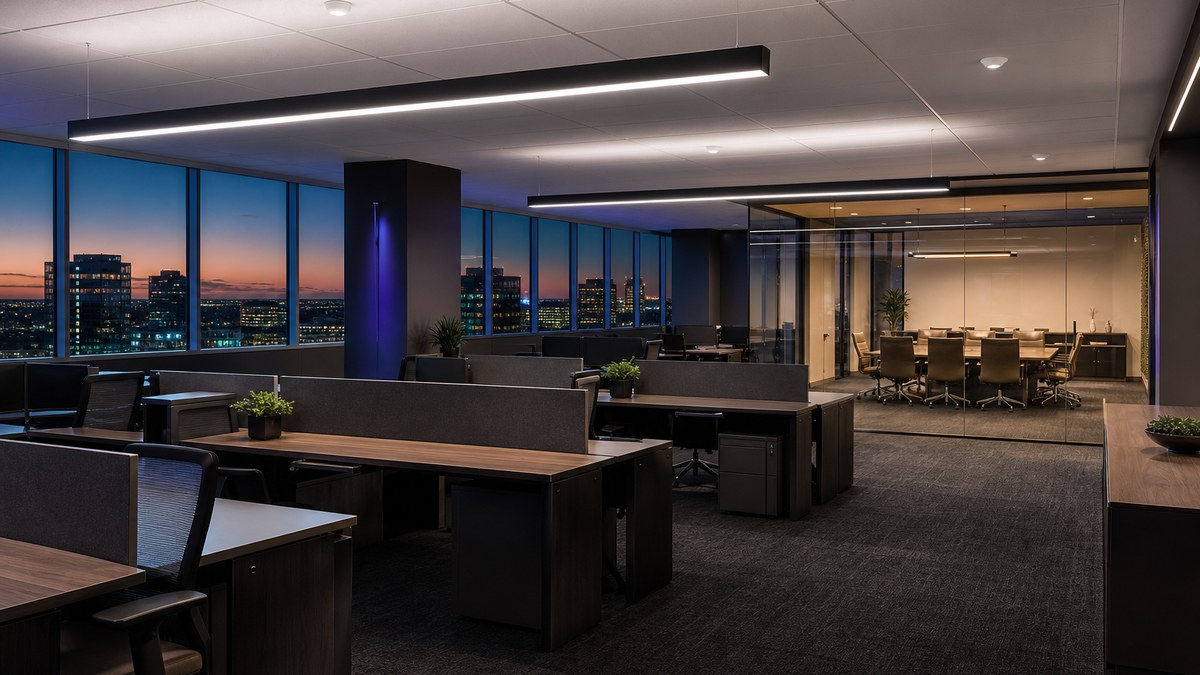
Offices around Legacy, Granite Park and the Dallas North Tollway corridor need comfortable, low-glare light for screens, good vertical light on faces for video calls, and controls that satisfy code without frustrating employees. Retrofit kits and integrated sensors let occupied floors be upgraded one area at a time after hours. Conference rooms benefit from dimmable scenes, and lobbies are an opportunity for architectural accents and LED video walls.
Retail and shopping centers
Retail installations must protect merchandise appearance with high color rendering, keep storefronts consistent, and work around store hours. Owners usually handle site and canopy lighting while tenants handle interiors. We cover this in detail in our guide to shopping center and retail LED lighting in Plano.
Warehouses, flex and industrial space
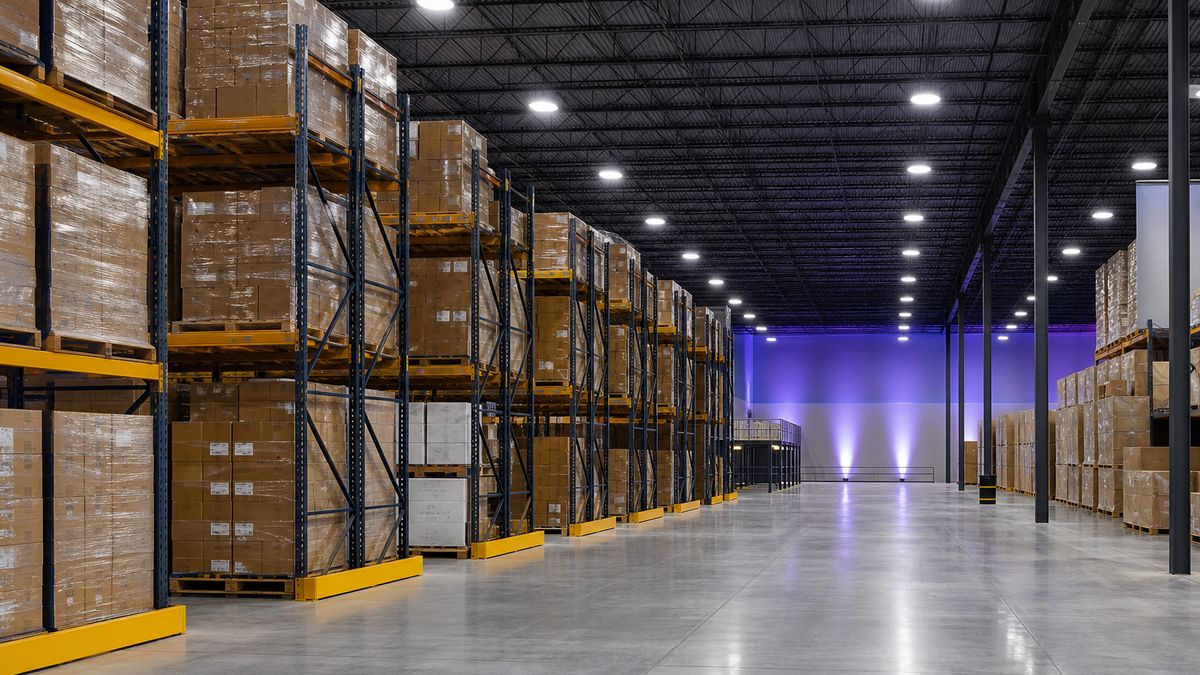
High bays are one of the most common commercial LED installations. Key choices include the beam distribution for aisles versus open floor, mounting height, sensor coverage, and how fixtures interact with racking, sprinklers and forklifts. Occupancy sensors that dim aisles when empty are especially effective in large spaces with intermittent traffic.
Restaurants and hospitality
Dining spaces need warm, dimmable light, drivers that dim smoothly without flicker, and durable exterior and patio lighting. Kitchen and back-of-house areas need bright, cleanable fixtures suited to the environment.
Medical, dental and professional offices
Exam rooms and treatment areas need high color rendering and flicker-free drivers, while waiting rooms and corridors benefit from softer, more residential lighting. Work is often scheduled on weekends or evenings to avoid patient hours.
Parking lots, garages and exteriors
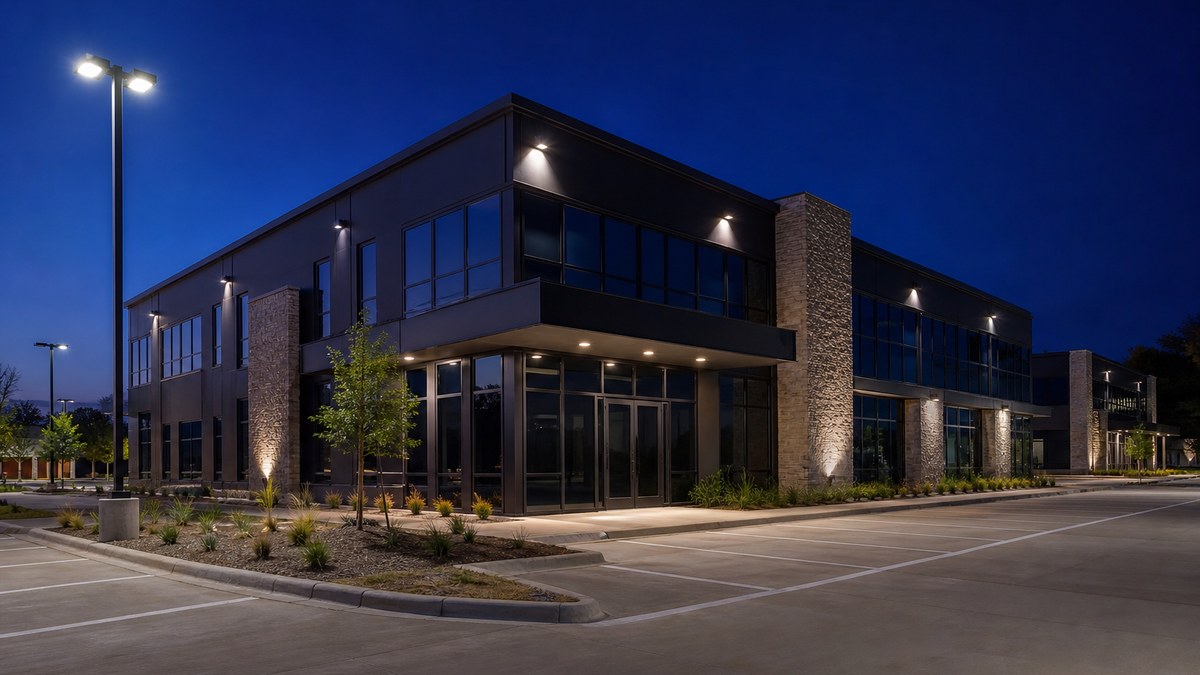
Exterior installations replace aging metal halide and high-pressure sodium heads, wall packs and canopy lights with LED fixtures that offer better uniformity, instant restart and full-cutoff optics. Controls let lighting dim late at night while maintaining security levels. Our commercial lighting services page outlines the full range.
Planning an LED installation in Plano?
Tell us about your building and we will follow up to schedule a walkthrough and a project-specific proposal.
Lighting controls: installed right the first time
Controls are where installation quality shows most clearly. A sensor in the wrong place or with the wrong settings will switch lights off on people at their desks, or leave a storage room lit all night. Energy codes require many controls on new installations and major alterations, and requirements depend on the scope of work and the code edition the City of Plano enforces, so they should be part of the design from the start.
| Control | Typical location | Installation tip |
|---|---|---|
| Occupancy / vacancy sensors | Private offices, restrooms, storage, break rooms | Match sensor technology and coverage to the room shape and furniture |
| Daylight sensors | Perimeter offices, lobbies, storefront zones | Calibrate after furniture and window treatments are in place |
| High-bay sensors | Warehouse aisles and open floors | Choose lenses for mounting height and aisle width |
| Time clocks and schedules | Common areas, exteriors, signs | Set holiday and daylight-saving schedules at commissioning |
| Photocells | Parking, canopies, facades | Mount where they read sky, not other fixtures |
| Dimming and scenes | Conference rooms, restaurants, lobbies | Confirm driver and dimmer compatibility before ordering |
| Networked controls | Multi-floor or multi-site portfolios | Define who manages the system and how changes are made |
For a deeper look at how LED fixtures and controls work together, see our commercial LED lighting guide for Plano businesses.
Minimizing disruption during installation
For most Plano businesses, the biggest worry about an LED project is downtime. A well-planned installation should be close to invisible to employees and customers.
- Phase by area: one floor, wing, department or tenant at a time, so the rest of the building runs normally.
- Work after hours: evenings, nights and weekends for offices and stores; overnight for exterior work where traffic is lowest.
- Protect the space: drop cloths, furniture covers and clean-up every shift.
- Coordinate with security and building management: access, alarms, elevators and loading dock times agreed in advance.
- Keep life-safety lighting working: emergency and exit lighting must stay operational and be tested after work in each area.
- Communicate: a simple schedule shared with tenants or staff so nobody is surprised by a lift in the lobby.
Emergency lighting and life safety
Any lighting project is a good time to check emergency egress lighting and exit signs. LED fixtures can be supplied with integral emergency battery packs, or emergency circuits can be maintained through existing systems. Your installer should identify which fixtures serve as egress lighting, keep them on the correct circuits, and test them after installation. Requirements depend on the building and the codes the city enforces, so this belongs in the design and permit stage.
What drives the scope of an installation project
Every building is different, so we price each project individually after a walkthrough. The main factors are:
- Number and types of fixtures and how many areas are included
- Method: lamp retrofit, retrofit kits, full replacement or new design
- Fixture quality: color rendering, optics, finish and driver type
- Controls: basic sensors and time clocks through networked systems
- Access: ceiling heights, lifts, poles, canopies and occupied spaces
- Electrical condition: aging circuits, panel capacity and code corrections
- Schedule: after-hours, weekend and phased work
- Permitting, disposal and documentation
You receive a written, project-specific proposal before any work begins. For sourcing, our network also includes wholesale LED components.
Questions to ask commercial LED contractors
- Who holds the Texas electrical license for this work, and who will be on site?
- Will you survey the building, including a night visit for exterior lighting?
- Which method do you recommend in each area, and why?
- Which manufacturers and models are specified, and what are their color rendering and warranty terms?
- Will you provide a photometric layout for key spaces?
- What controls are included, and who commissions and programs them?
- Do you pull the permit and handle inspections?
- How will the work be phased around our hours?
- How are old lamps and ballasts disposed of?
- What documentation do we receive, and who handles service afterward?
Why Plano businesses work with Plano LED Lights
Plano LED Lights brings 15+ years as an authorized architectural lighting dealer and project coordinator. Our licensed installation partner has completed over 200 major sports and commercial projects across the US and Canada — NFL, NBA, NHL, MLS, NCAA and NASCAR. We handle survey, design, supply, installation, controls programming and service with one accountable team, for offices, retail, warehouses, restaurants, medical buildings and exteriors across Plano, Frisco, Allen, McKinney, Richardson and Addison.
Explore our commercial lighting services, see how we approach architectural lighting and signage, read about business lighting services in Plano, or learn about full design-build projects through our Luminance program. Ongoing repair and maintenance needs are covered on our lighting service page, and you can check the cities we cover in our service areas.
Frequently Asked Questions
What does commercial LED lighting installation include?
Should I retrofit my existing fixtures or replace them?
Do I need a permit for an LED lighting upgrade in Plano?
Do LED retrofits have to meet the energy code?
How long does a commercial LED installation take?
Can LED lighting be installed without closing my business?
Are there incentives for commercial LED installation in Plano?
What should I look for in a commercial LED lighting contractor?
How much does commercial LED installation cost?
What areas do you serve?
Get your LED installation done right
Request a consultation and we will follow up to schedule a walkthrough of your building, or book a meeting directly.
Related
Our DFW lighting network: Dallas commercial LED lighting, Fort Worth LED lighting, Arlington LED lighting, Irving LED lighting, statewide Texas LED lighting, wholesale LED components, fiber optic starlight ceilings, 360° fiber optic lighting, premium pool lighting, modular building solutions, Dallas modular structures, and LED signage.