LED Video Walls in Plano, TX: A Buyer's Guide for Lobbies, Churches, Retail & Event Spaces
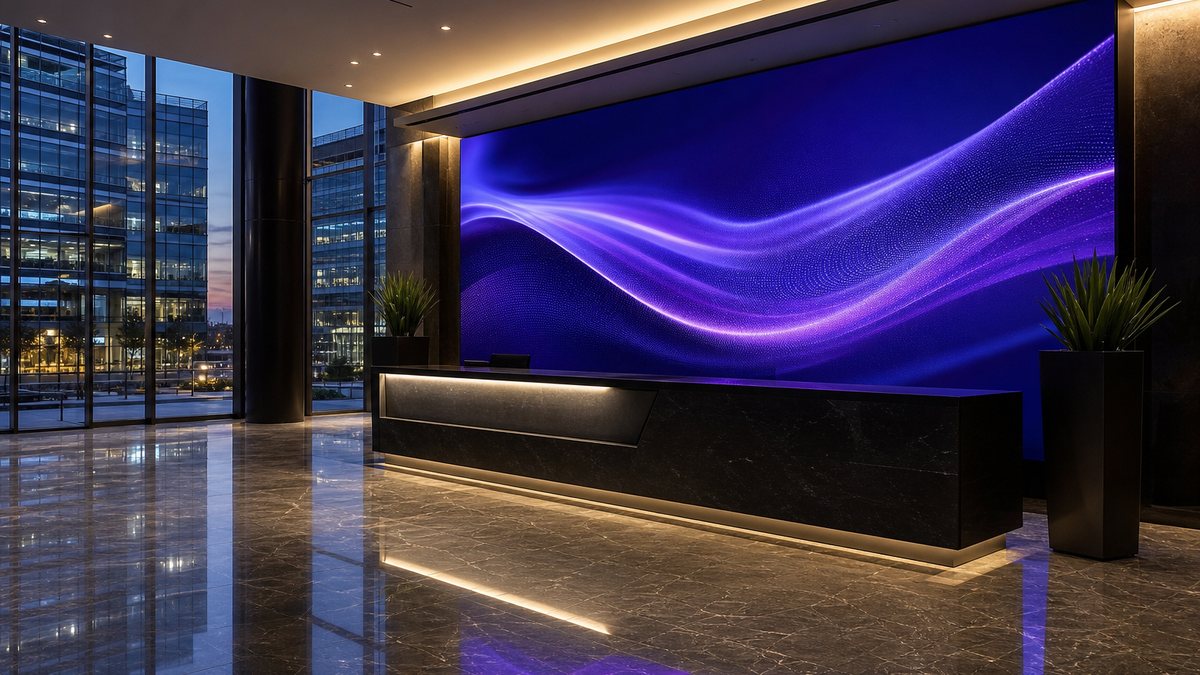
LED video walls in Plano have moved from stadiums and concert stages into everyday commercial buildings. Corporate lobbies around Legacy and Granite Park use them as a living brand wall, churches across Collin County use them in place of projector screens, retailers use them to stop people walking past a storefront, and restaurants, training rooms and event venues use them to set the mood. A direct-view LED wall is bright, seamless and can be built in almost any size or shape, which is exactly why choosing one takes more care than buying a television.
This guide is written for property managers, facilities teams, church leaders, retail operators and architects in Plano, Frisco, Allen, McKinney and Richardson. It explains how LED video walls work, how to choose pixel pitch for your viewing distance, what changes between a lobby, a sanctuary and a storefront, what the structure, power and control side looks like, how to plan content, and what to ask before you sign a proposal.
An LED video wall is a large, seamless display built from modular direct-view LED panels. The right wall for a Plano building depends on viewing distance, ambient light, content and how the space is used.
- Pixel pitch: pick it from the closest normal viewing distance; finer pitch for lobbies and meeting rooms, coarser pitch for large sanctuaries, atriums and outdoor faces
- Brightness: sun-facing windows and outdoor walls need far more output than an interior worship space
- Structure and power: wall or floor mounting, front or rear service access, dedicated circuits and ventilation are planned before panels are ordered
- Control: a video processor, a content player or scheduling software, and a simple way for staff to switch sources
- Content: designed for the wall's real resolution and shape, not stretched from a slide deck
- Pricing: quoted per project after a site visit, in a project-specific proposal
What is an LED video wall, and how is it different?
A direct-view LED (often called DVLED) video wall is made of cabinets or panels covered in tiny red, green and blue LEDs. Each cluster of LEDs is one pixel. Panels lock together with no visible seams, a receiving card in each panel takes its share of the picture, and a video processor feeds the full image to the whole wall. Because the wall is built from modules, it can be wide and short for a reception desk backdrop, tall and narrow for a column, curved around a corner, or very large for a worship center.
That modular design is the big difference from the two older options most buildings compare against:
- Tiled LCD video walls: several flat-panel displays mounted together. They are sharp up close but show thin black lines (bezels) between screens, and the size and shape are limited to whole display units.
- Projectors and screens: good in dark rooms but washed out by daylight and house lights, and they need a clear throw path, lamp or laser maintenance and a dim room to look their best.
- Direct-view LED: seamless at any size, much brighter, viewable from wide angles and largely unaffected by ambient light. The trade-off is that very fine pixel pitches for close viewing are a bigger investment, so matching pitch to distance matters.
| Option | Strengths | Watch-outs | Typical fit |
|---|---|---|---|
| Direct-view LED wall | Seamless, very bright, any size or shape, wide viewing angles | Pitch must match viewing distance; needs structure, power and ventilation planning | Lobbies, sanctuaries, atriums, storefronts, event spaces |
| Tiled LCD wall | Very sharp up close, familiar technology | Visible bezels, fixed sizes, lower brightness than LED | Control rooms, small meeting rooms, data dashboards |
| Projector and screen | Large image for the hardware, flexible | Washes out in light, throw distance, ongoing maintenance | Dark auditoriums, classrooms, temporary setups |
| Single large display | Simple, quick to install | Size limited, can look small in a big space | Huddle rooms, small offices, menus |
Pixel pitch and viewing distance: the most important decision
Pixel pitch is the distance between the centers of two neighboring pixels, measured in millimeters. A smaller number means pixels are packed closer together, the image looks smoother up close, and the wall has more pixels for the same size. A larger number means fewer pixels, a coarser look up close, but a perfectly clean image from farther back.
Most manufacturers and integrators use a simple rule of thumb as a starting point: the pitch in millimeters roughly equals the closest comfortable viewing distance in meters, which works out to a little over three feet per millimeter. Some designers push further back for a premium look with text and fine detail. It is a guideline, not a law, but it explains why one wall can look stunning in an atrium and grainy behind a reception desk.
| Where viewers stand | Typical pitch range to consider | Common Plano applications |
|---|---|---|
| Very close (a few feet) | Fine pitch, roughly 0.9–1.5 mm | Boardrooms, reception desk backdrops, executive briefing centers |
| Close (roughly 6–12 ft) | About 1.5–2.5 mm | Corporate lobbies, retail interiors, training rooms, showrooms |
| Medium (roughly 12–25 ft) | About 2.5–3.9 mm | Church sanctuaries, large conference rooms, restaurant feature walls |
| Far (25 ft and beyond) | About 3.9 mm and up | Large worship centers, atriums, arenas, event halls |
| Outdoor viewing | Outdoor-rated, usually coarser pitch | Building facades, plazas, drive-up and roadside faces |
Two more checks keep the decision honest. First, think about what will be shown: fine text, spreadsheets and detailed product photos need a finer pitch than motion graphics, worship lyrics or abstract brand loops. Second, check the resulting resolution. A wall's pixel count is its size divided by its pitch, so a small wall with a coarse pitch may not have enough pixels to show a full HD video cleanly, while a large fine-pitch wall may need more than one processor.
Stand where the closest regular viewer will stand, not where you would like them to stand. In a lobby that is usually the reception desk or the path from the door; in a sanctuary it is the front row. That spot, not the back wall, decides the pitch.
Brightness, contrast and ambient light
LED walls are measured in nits (candela per square meter). Brighter is not always better. Too little output and the wall looks flat next to a sunlit glass curtain wall; too much and it becomes uncomfortable, causes glare on camera and wastes energy.
- Lobbies with floor-to-ceiling glass: common around Legacy, Granite Park and the Dallas North Tollway corridor. Afternoon sun can hit the wall directly, so the panel needs headroom and automatic brightness that steps down after dark.
- Sanctuaries and auditoriums: usually run the wall well below its maximum so it looks natural beside stage lighting and on livestream cameras.
- Storefront windows: walls facing outward through glass need high output and good contrast to read in daylight, plus scheduling so they dim or switch off overnight.
- Outdoor walls: require outdoor-rated, weather-protected cabinets with very high brightness and a sensor to adjust for day and night. Exterior screens can also fall under local sign rules, so check with the City of Plano early.
Contrast matters as much as brightness. Black LED packages and dark face masks help a wall look deep and rich instead of gray, especially in lit rooms. Color calibration across every panel keeps the wall uniform, which is something to ask about whenever panels come from different production batches.
LED video walls by space type
Corporate lobbies and headquarters
A lobby wall is the first thing visitors see, so it works as brand architecture rather than a TV. Common content includes slow ambient loops, brand stories, welcome messages for visiting guests, sustainability or company milestones, and art commissions. Lobbies usually need a fine to medium pitch, careful mounting flush with the wall finish, and lighting around the wall that does not wash it out. We cover the rest of the lobby lighting picture in our corporate campus lighting guide for Legacy and Granite Park.
Churches and houses of worship
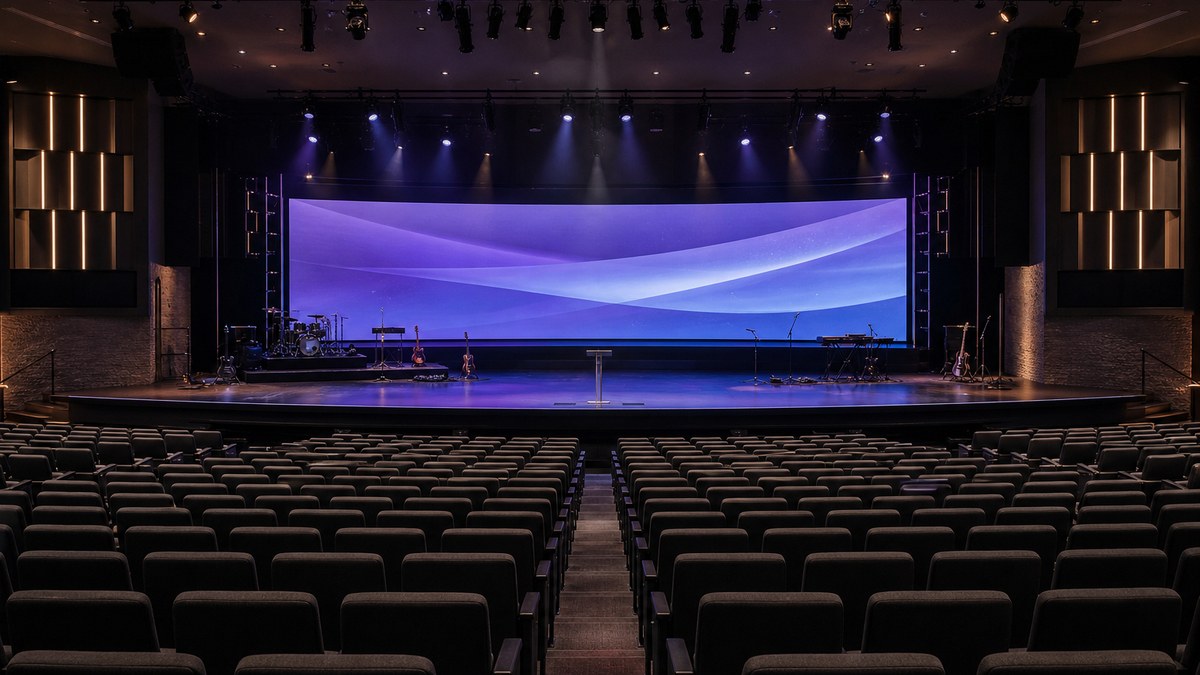
Churches across Plano and Collin County are replacing projectors with LED walls so lyrics, scripture, sermon graphics and video stay bright even with house lights up. Key decisions include pitch for the front-row distance, how the wall looks on the livestream camera, refresh rate so the image does not flicker or show lines on camera, and integration with the production booth's switcher and presentation software. Some churches split the wall into a center screen and side screens; others use one wide canvas for immersive backgrounds.
Retail stores and shopping centers
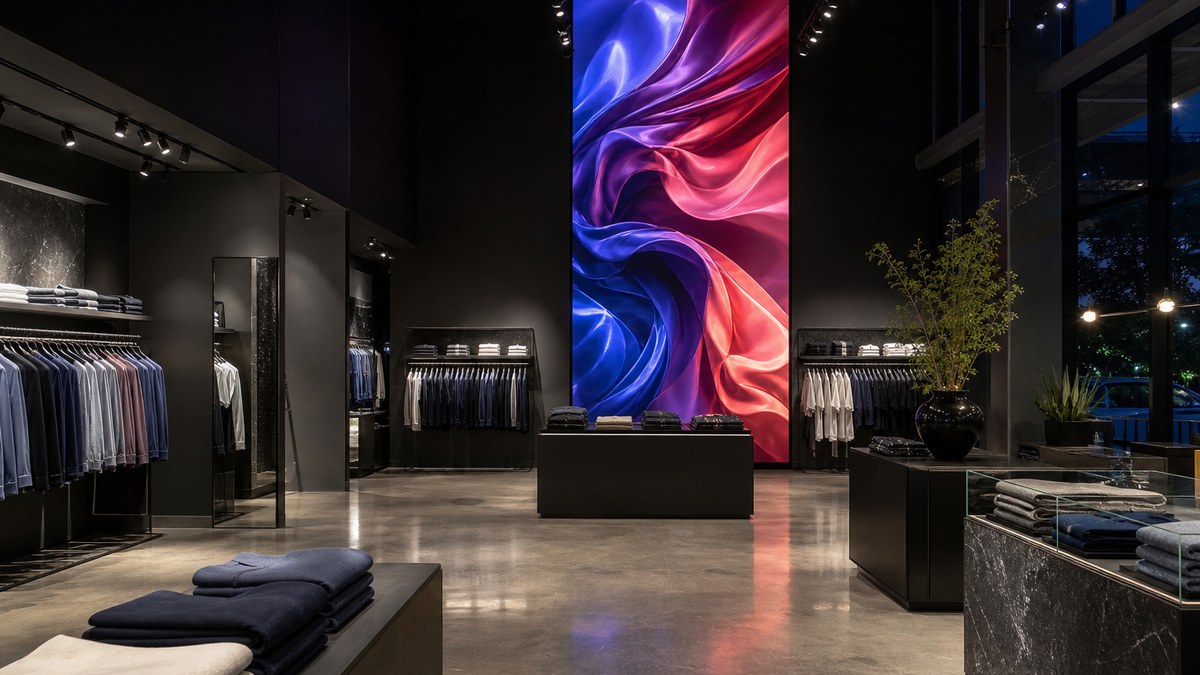
In retail, a video wall is a merchandising tool. Window-facing walls draw attention from the parking lot and sidewalk, interior walls tell product stories, and digital columns or wraps add movement to open floor plans. Retail walls need high brightness near glass, flexible scheduling for promotions and store hours, and content that is easy for the marketing team to update. For the wider store lighting plan, see our shopping center and retail LED lighting guide.
Restaurants, bars and hospitality
Restaurants and lounges use LED walls for atmosphere: slow-moving art, sports, event nights and branded backdrops. They usually run lower brightness for comfort and need content that does not compete with diners' conversations. Combined with warm, dimmable room lighting and signature features such as fiber optic starlight ceilings, a wall can change the whole feel of a dining room between lunch and late evening.
Meeting rooms, training rooms and briefing centers
In conference spaces, an LED wall replaces dual displays or a projector with one seamless canvas that can show a video call, a presentation and a shared document side by side. These rooms need fine pitch for close viewing, quiet cooling, simple source switching and room lighting tuned so faces look good on camera. Our meeting and conference room lighting guide explains how to light the room around the wall.
Event spaces, atriums and venues
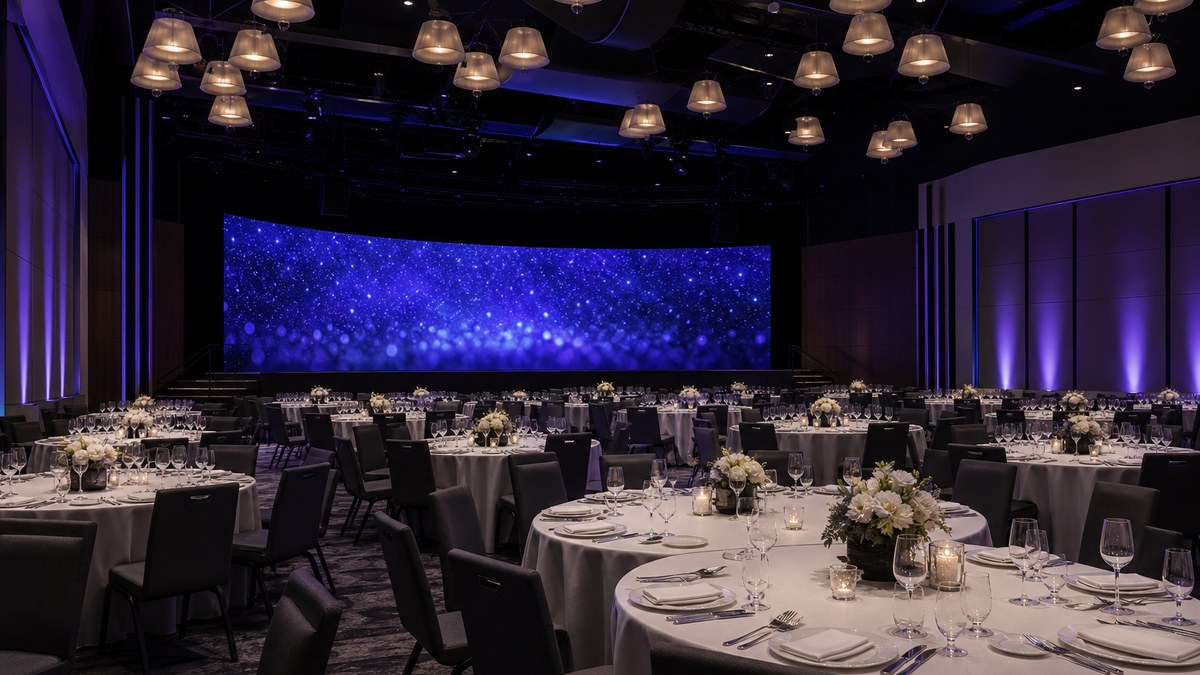
Ballrooms, event halls, atriums and mixed-use plazas often need very large walls viewed from far away. A coarser pitch keeps the project practical, while rental-grade or curved cabinets allow different stage layouts. These spaces also benefit from tying the wall into architectural lighting so color, scene and content change together.
Planning a video wall in Plano?
Tell us about the space, the viewing distance and what you want to show, and we will follow up to schedule a site visit and a project-specific proposal.
Indoor vs outdoor LED video walls
Indoor and outdoor walls look similar from a distance, but they are built very differently. Indoor panels prioritize fine pitch, color accuracy, quiet operation and slim profiles. Outdoor cabinets are sealed against rain, dust and heat, use much higher brightness, and are designed for wind loads and the North Texas sun. Texas summers make heat management a real design issue: cabinets need ventilation or cooling, and enclosures should be specified for the local climate.
- Ingress protection: outdoor cabinets carry a weather rating; ask which rating applies to the front and the back of the cabinet.
- Structure: outdoor walls on facades, poles or monuments usually need engineered steel and permits.
- Sign rules: exterior digital displays may be regulated as signs, including brightness, size, placement and message timing. Confirm the requirements that apply to your property with the City of Plano before design is final.
- Signage partners: for monument signs, message centers and channel letters, our network partner American LED Signage handles exterior LED signage.
Structure, power, data and service access
The panels are only part of the project. Most of the planning time goes into what sits behind and around them.
Mounting and structure
LED cabinets are heavy and must be perfectly flat and aligned, or seams show. Walls can be mounted on a wall bracket system, a floor-standing frame, a ceiling-hung structure or a custom steel frame. The existing wall or slab must carry the load, so a structural review is often part of the scope for large walls or older buildings.
Front vs rear service
Front-service panels let a technician remove modules from the face of the wall with a magnetic tool, which allows the wall to sit nearly flush against a surface. Rear-service walls need a walkway behind them. In lobbies and sanctuaries where depth is limited, front service is usually the practical choice.
Power and heat
Video walls need dedicated circuits sized for peak brightness, a clean path for power distribution and enough ventilation to remove heat. A licensed electrician confirms panel capacity, circuits and code items. Heat from a large wall in a closed niche can be significant, so airflow is planned with the mechanical team.
Data and signal path
The video processor scales sources to the wall's exact resolution and sends data through network cables to each panel. Processor location, cable runs, redundancy for critical walls, and connections to cameras, media players, laptops or a production switcher are all mapped during design.
Control systems and content
A wall is only as good as what is on it and how easily staff can run it. Plan the control and content side at the same time as the hardware.
| Component | What it does | Questions to settle |
|---|---|---|
| Video processor | Scales and maps sources to the wall, controls brightness and color | How many inputs? Picture-in-picture or multiple windows? |
| Media player / CMS | Plays scheduled content and playlists | Who updates content, and from where? |
| Control panel or app | One-touch source switching and presets | Can front-desk or volunteer staff run it without training? |
| Scheduling | Turns the wall on, off or to a dim level by time | Business hours, services, events, overnight? |
| Monitoring | Alerts on panel, power or signal faults | Who receives alerts and who responds? |
| Lighting integration | Coordinates room lighting scenes with the wall | Should lights dim when a video plays? |
Content deserves its own plan. LED walls rarely match a standard 16:9 shape, so content should be built at the wall's exact pixel resolution. Slow, high-quality motion usually looks more premium in a lobby than fast-cut advertising, while churches need lyric and scripture templates that read clearly from the back row. A small library of evergreen loops plus a simple way to add timely messages keeps the wall from going stale.
Room lighting matters too. Downlights aimed at the wall, poorly placed accent lights or bright reflections off nearby glass reduce contrast. When we plan a wall, we look at the surrounding lighting and controls together; our office lighting controls guide explains scenes, dimming and scheduling that can be tied into the wall.
How an LED video wall project runs, step by step
- Discovery: how the space is used, who watches from where, what content will run and who will operate it.
- Site visit: measure the wall, viewing distances, ambient light at different times of day, structure, power, data paths and access.
- Design: pitch, size, resolution, brightness, mounting, service access, processor and control layout, plus drawings for the architect, general contractor or building owner.
- Mockup or demo: where possible, review sample panels or a demo at the right distance so the pitch decision is made with your own eyes.
- Project-specific proposal: scope, equipment, schedule and responsibilities in writing.
- Coordination: structural, electrical, millwork and permit items scheduled with the building team and, for tenant spaces, building management.
- Installation: structure first, then panels, alignment, power and data, often after hours in occupied buildings or between services for churches.
- Calibration and commissioning: color and brightness uniformity, processor mapping, schedules and control presets.
- Training and handover: simple operating guides, content templates, spare modules and a service plan.
What drives the cost of an LED video wall
Every wall is different, so Plano LED Lights prices each project individually after a site visit. The main factors are:
- Size and pixel pitch: the biggest drivers, because finer pitch means many more LEDs per square foot
- Indoor or outdoor: weatherproof, high-brightness cabinets and engineered structures add scope
- Panel quality: LED packaging, calibration, refresh rate, color consistency and serviceability
- Structure: wall reinforcement, custom frames, curves, corners or ceiling-hung designs
- Electrical and HVAC: new circuits, panel capacity and ventilation
- Processing and control: number of inputs, redundancy, content system and integration with AV or production gear
- Content: whether you supply content or need design support
- Schedule and access: after-hours work, lifts and work around services or store hours
You receive a written, project-specific proposal before any work begins. For component sourcing on the lighting side, our network also includes wholesale LED components.
Common mistakes to avoid
- Choosing pitch from a brochure instead of the room: a pitch that looks fine at a trade show can look grainy from a reception desk.
- Ignoring daylight: a wall that looks great at night may disappear in afternoon sun through west-facing glass.
- No service plan: walls built with no access path or spare modules are hard to keep perfect.
- Stretching content: content not built for the wall's resolution and shape looks blurry or distorted.
- Complicated controls: if staff or volunteers cannot switch sources easily, the wall ends up showing the same loop forever.
- Forgetting the room lighting: glare, reflections and light spill onto the wall reduce contrast and camera quality.
- Late permits and building approvals: exterior walls and structural work can need approval from the city, building management or a landlord.
Questions to ask before you hire
- Will you visit the site and measure viewing distances and ambient light at different times of day?
- Why is this pixel pitch right for our closest viewers and our content?
- Can we see sample panels or a demo at our real viewing distance?
- Is the wall front-service or rear-service, and how are failed modules replaced?
- What refresh rate does the wall run at, and how does it look on camera?
- What does the electrical, structural and ventilation scope include, and who handles permits?
- Which processor and control system are included, and who programs them?
- Which manufacturer warranties apply to panels, power supplies and processors, and who handles service calls?
- Are spare modules included so replacements match the wall's color?
Plano LED Lights brings 15+ years as an authorized architectural lighting dealer and project coordinator. Our licensed installation partner has completed over 200 major sports and commercial projects across the US and Canada — NFL, NBA, NHL, MLS, NCAA and NASCAR. We handle design, supply, installation, programming and service with one accountable team. See our LED video wall services, the full range of commercial lighting services, or full design-build projects through the Luminance program. If you are still planning installers for the wider building, our commercial LED installation guide covers how to compare contractors.
Frequently Asked Questions
What is an LED video wall?
What pixel pitch do I need for my LED video wall?
Is an LED video wall better than a projector for a church?
LED video wall vs LCD video wall: which is better?
Can an LED video wall go in a lobby with lots of glass?
Do outdoor LED video walls need a permit in Plano?
How is content managed on an LED video wall?
How long does an LED video wall project take?
How much does an LED video wall cost in Plano?
What areas do you serve for LED video walls?
Put a seamless LED wall where it matters
Request a consultation and we will follow up to schedule a site visit, or book a meeting at a time that suits you.
Related
More from our blog: fixture installation and replacement, Highland Park retail lighting, Highland Village and Lake Dallas business lighting, and every guide on the Plano LED Lights blog. Serving Plano and the surrounding service areas.
Our DFW lighting network: Dallas commercial LED lighting, Fort Worth LED lighting, Arlington LED lighting, Irving LED lighting, statewide Texas LED lighting, wholesale LED components, fiber optic starlight ceilings, 360° fiber optic lighting, premium pool lighting, modular building solutions, and Dallas modular structures.