Restaurant & Patio Lighting in Plano, TX: Dining Rooms, Bars, Patios & Outdoor Dining in Legacy
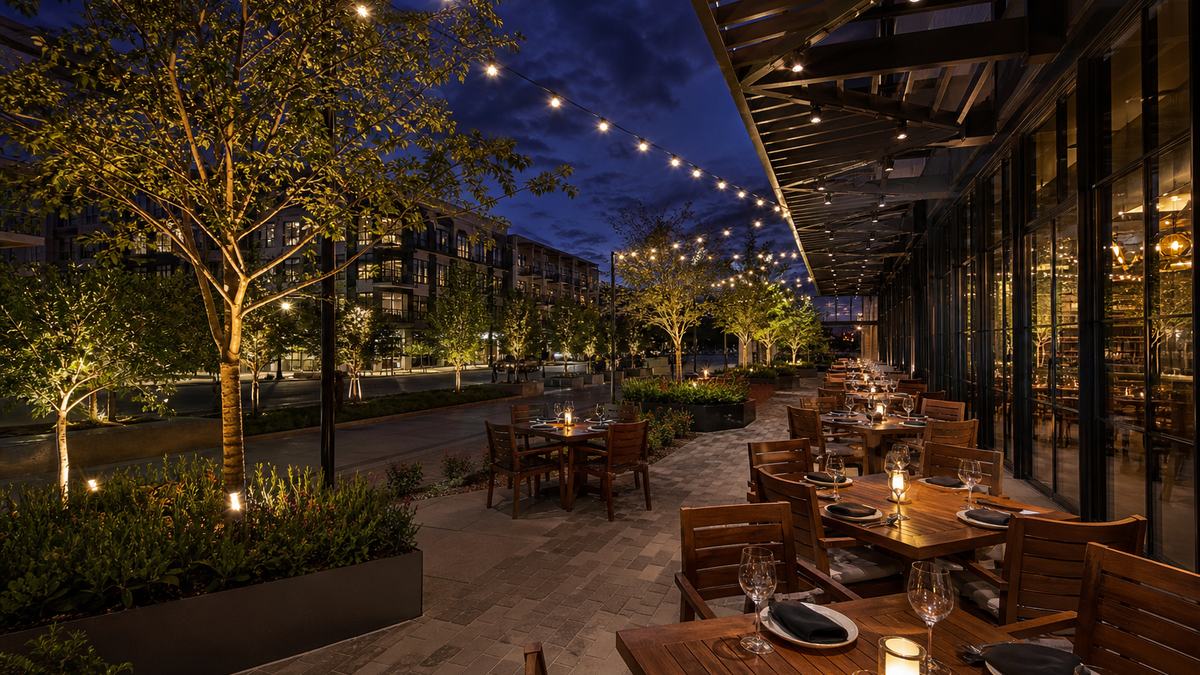
Restaurant and patio lighting in Plano is one of the few building systems guests notice in the first ten seconds. Light decides whether a dining room feels relaxed or rushed, whether food looks fresh or flat on the plate, whether a patio feels like the best seat in the house or an afterthought, and whether drivers passing on Preston Road, Legacy Drive or the Dallas North Tollway read the place as open and inviting. For Plano restaurants, bars, cafés, breweries and food halls, it is also a working system that runs from early prep to late close, often seven days a week.
This guide is for restaurant owners, operators, franchisees, general managers and the property owners who lease to them in Plano, Legacy, Granite Park, Downtown Plano and across Collin County. It covers how to layer light in a dining room, how to light bars, kitchens and restrooms, how to design a patio that stays comfortable on a Texas summer night and through winter, which controls make lighting easy for staff, how to plan an upgrade without losing service, and what to ask before you hire a lighting contractor.
Good restaurant and patio lighting in Plano uses warm, dimmable, high-color-quality LED in layers, with scenes that change from lunch to dinner and outdoor fixtures rated for Texas heat, wind and storms.
- Dining rooms: warm 2700K–3000K, 90+ CRI, dimmable downlights and pendants, light on tables rather than faces
- Bars: back-bar and under-counter accent light, low glare, separate dimming from the dining room
- Kitchens and prep: bright, even, cleanable fixtures with good color for food safety and plating
- Patios: wet-rated string or festoon lights, shielded downlights, step and path light, and light on plants and walls
- Exterior: lit entry, facade and signage support plus safe walkways and parking
- Controls: one-touch scenes, astronomical time clocks and dimming for exterior lights
- Pricing: project-specific proposal after a site walk, ideally one in the evening
Why lighting matters for Plano restaurants
Plano diners have plenty of choice. Mixed-use districts around Legacy, the historic storefronts on 15th Street in Downtown Plano, neighborhood centers along Park Boulevard, Coit Road and Spring Creek Parkway, and new destinations in Frisco, Allen and Richardson all compete for the same evening. Food and service come first, but lighting shapes how guests experience both.
- Atmosphere and concept: a steakhouse, a taqueria, a sushi bar and a brewpub should not look the same. Light is one of the fastest ways to make a concept feel intentional.
- Food and drink appearance: color quality decides whether greens look crisp, steak looks seared and cocktails glow, or whether everything looks gray.
- Comfort and dwell time: glare in the eyes, harsh overhead light and flicker make guests want to leave. Soft, layered light keeps them for dessert and another round.
- Photos and social sharing: guests photograph plates, cocktails and patios. Even, warm light on the table helps those photos look good without flash.
- Curb appeal: a glowing patio and a well-lit entry tell passing traffic the restaurant is open and busy.
- Safety and operations: steps, ramps, walkways, back doors and parking need reliable light for guests and for staff leaving after close.
- Operating costs: long hours make efficient LED and simple controls one of the most practical upgrades a restaurant can make.
Layering light in the dining room
The difference between a dining room that feels designed and one that feels like an office with tables is almost always layering. Each layer has a job, and each should be on its own dimmable zone.
Table light first
The table is the stage. Narrow-beam downlights or pendants aimed at the center of each table put light on food and hands while keeping faces in soft, flattering light. When tables move, adjustable downlights or track heads let staff re-aim without new fixtures. A common mistake is lighting the floor between tables instead of the tables themselves.
Ambient and wall light
Light on walls, ceilings and architectural features fills the room and stops it from feeling like a cave. Wall washers, cove lighting and lit shelving add depth and help guests read the size of the space. Lighting the walls also reduces the contrast between bright tables and dark surroundings, which is easier on the eyes over a long meal.
Decorative and feature light
Pendants, chandeliers, sconces and lit art carry the brand. They should look good at low output, because in the evening they often run dimmed. Choose LED sources and drivers that dim smoothly to low levels without flicker or color shift.
Accent light
Wine walls, open kitchens, host stands, art, plants and textured materials such as brick, stone and wood come alive with focused accent light. Accent light is what creates a few places for the eye to rest instead of a uniform wash.
| Concept or space | Typical color temperature | Lighting approach |
|---|---|---|
| Fine dining and steakhouse | 2700K, warm-dim options | Low ambient, focused table light, strong accent on materials |
| Casual and family dining | 2700K–3000K | Brighter, even light with dimming for evenings |
| Fast casual and counter service | 3000K–3500K | Bright menu and counter zones, softer seating zones |
| Cafés and bakeries | 3000K | High-color display light on pastries and cases |
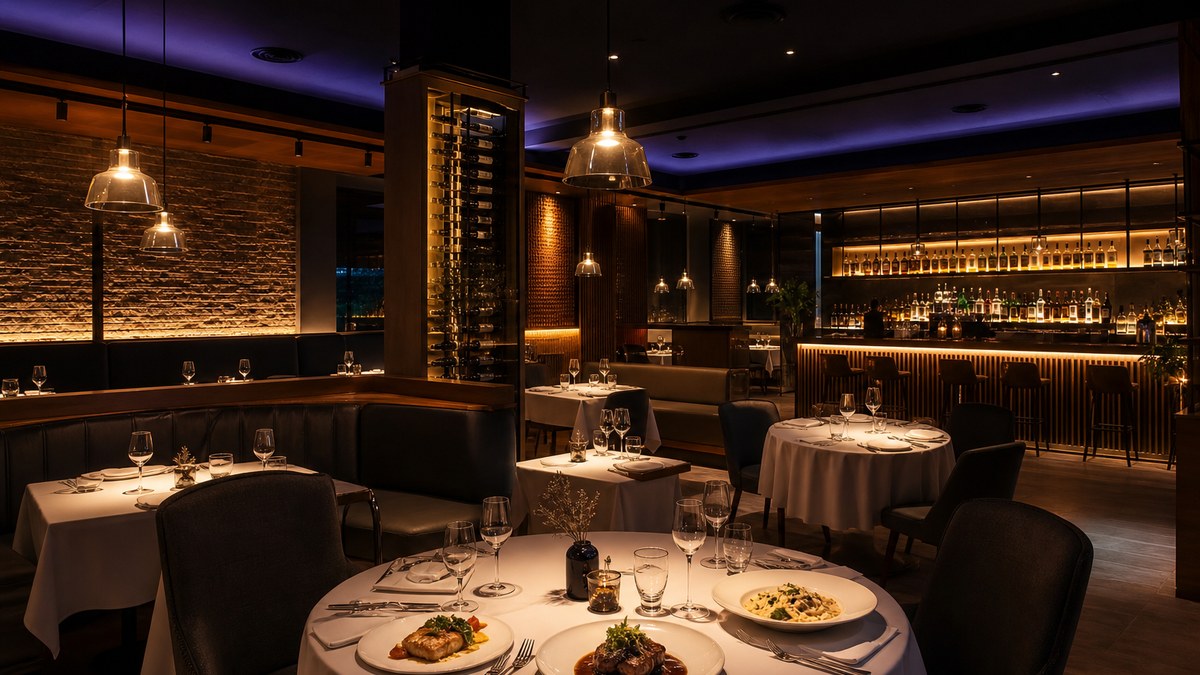
| Bars, lounges and wine bars | 2200K–2700K | Low ambient, glowing back bar, under-counter accents |
| Breweries and food halls | 3000K–4000K by zone | Durable linear and pendant light, clear wayfinding |
| Kitchens and prep | 3500K–4000K | Bright, even, cleanable fixtures with good color |
These are starting points. Finishes, ceiling height, window daylight and brand standards all change the right answer, which is why a quick mockup of two or three fixtures during an evening walkthrough is worth the time.
Color quality, dimming and flicker
Restaurants ask more of LED than most commercial spaces because guests look closely at food, drinks and each other's faces for an hour or more.
- CRI and R9: 90+ CRI with a strong R9 (saturated red) value keeps meat, tomatoes, wine, berries and skin tones looking natural. Low-cost fixtures with weak R9 make food look dull.
- Warm dimming: warm-dim (dim-to-warm) LED gets warmer as it dims, closer to the way incandescent lamps behaved. It is popular in fine dining and bars.
- Smooth low-end dimming: the fixture and driver should dim to low levels without dropping out, popping on or buzzing. Matching dimmers, drivers and fixtures is part of the design, not an afterthought.
- Low flicker: flicker that guests do not consciously see can still cause discomfort and shows up as banding in phone video. Ask for fixture flicker data.
- Color consistency: fixtures from tight color bins keep a row of pendants or downlights from showing mismatched tints.
Bars, kitchens, restrooms and back-of-house
Bars and lounges
The back bar is usually the brightest focal point in a bar. Linear LED under shelves and behind bottles makes glassware glow, while under-counter light along the bar front adds depth. Bartenders need enough task light to pour, mix and read tickets without glare in guests' eyes. Keep the bar on its own dimming zone so it can stay lively when the dining room winds down.
Open kitchens and expo
An open kitchen is part of the show, but cooks still need bright, even, shadow-free light. Use fixtures with good color so plating looks right, and balance the kitchen against the dining room so it reads as a lit stage rather than a glaring hole. At the pass, focused light helps staff check plates before they leave.
Back kitchens, prep and dish
Back-of-house needs bright, cleanable fixtures suited to heat, grease and moisture, with good color for checking food. Walk-in coolers and freezers need fixtures rated for cold. Occupancy sensors in storage, offices and dry goods rooms keep lights from running all night.
Restrooms and corridors
Restrooms are part of the guest experience. Flattering vanity light at face height, warm color and clean, even light tell guests the whole restaurant is cared for. Corridors and exits need code-required egress and emergency lighting, which should be checked any time fixtures change.
Patio lighting that works in North Texas
Patios are some of the most valuable seats in Plano for much of the year, and for many restaurants they are the first thing guests see from the parking lot. North Texas patios face real conditions: summer heat that lingers into the evening, strong wind, spring storms and hail, and the occasional winter freeze. Lighting has to look good and survive.
The layers of a great patio
- Overhead glow: string or festoon lights on proper catenary cables give a patio its signature look. Commercial-grade, wet-rated strings with shatter-resistant LED lamps and secure mounting last far longer than retail holiday strings.
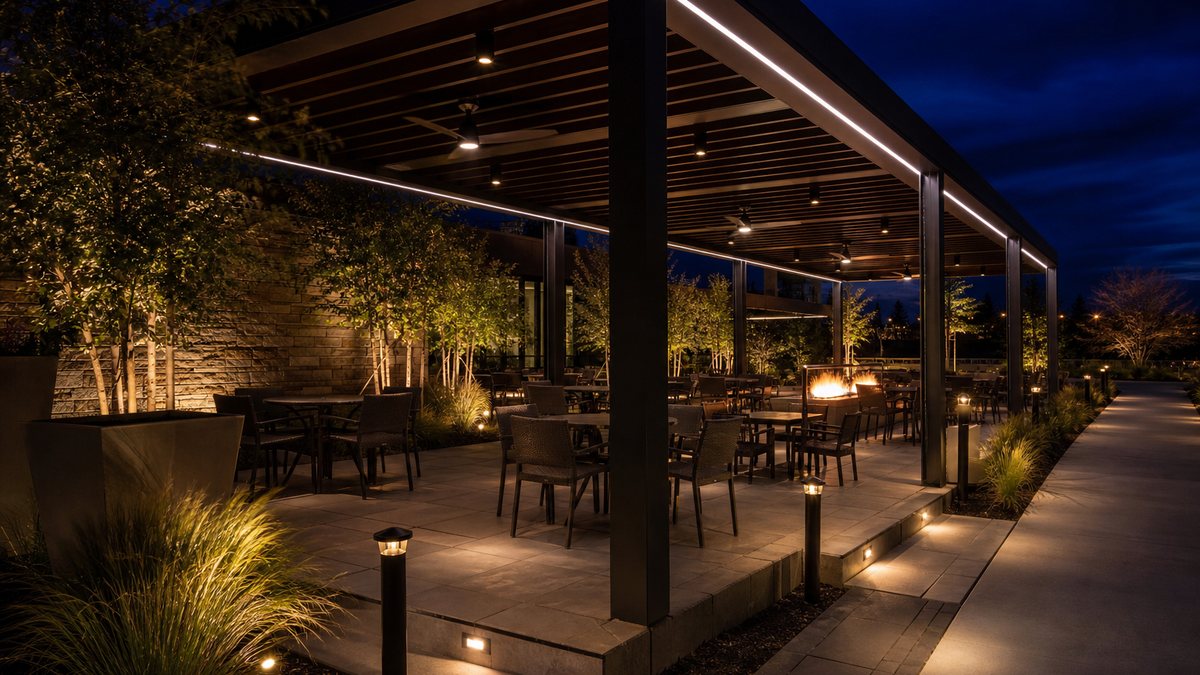
- Table and surface light: shielded downlights from pergolas, shade structures or building soffits put useful light on tables so guests can read menus and see their food.
- Vertical light: light on walls, planters, trees and screens gives the patio edges and makes it feel enclosed and safe.
- Path and step light: low step lights, bollards and in-grade fixtures mark changes in level, ramps and entries without glare.
- Feature light: fire features, water features and signature elements can be lit as focal points. For fountains and outline effects, our network offers 360° laser fiber optic lighting.
Pergolas, shade sails and covered patios
Pergolas and covered patios make lighting easier because fixtures can mount overhead. Linear LED tucked into beams, small downlights in the cover and lit ceiling fans create an outdoor room. For shade sails, string lights and pole-mounted fixtures usually work better than anything attached to the fabric. A coffered or covered patio ceiling is also a place for a signature effect such as fiber optic starlight ceilings.
Rooftop and upper-level patios
Rooftop bars and upper-level terraces in mixed-use buildings need extra attention to wind, mounting and glare. Low, shielded light keeps the city view visible instead of reflecting fixtures in glass railings. Perimeter light at parapets, steps and railings is important for safety.
Choosing outdoor-rated equipment
- Wet location ratings and IP ratings that suit exposed or covered positions
- Corrosion-resistant finishes and stainless hardware
- Drivers rated for high ambient heat, mounted where they can shed heat and be serviced
- Surge protection for exterior circuits
- GFCI protection and outdoor-rated wiring and connections installed to code by licensed electricians
- Impact and shatter resistance where fixtures are within reach of guests
Sit at three or four patio tables after dark and look up, out and back toward the building. Glare from a bare lamp, a dark corner or a bright wall pack in your eyes will show up immediately. That simple walk is the first thing we do on a restaurant site visit.
Planning a restaurant or patio lighting upgrade in Plano?
Tell us about your dining room, bar or patio and we will follow up to schedule an evening walkthrough and a project-specific proposal.
Entries, facades, signage and parking
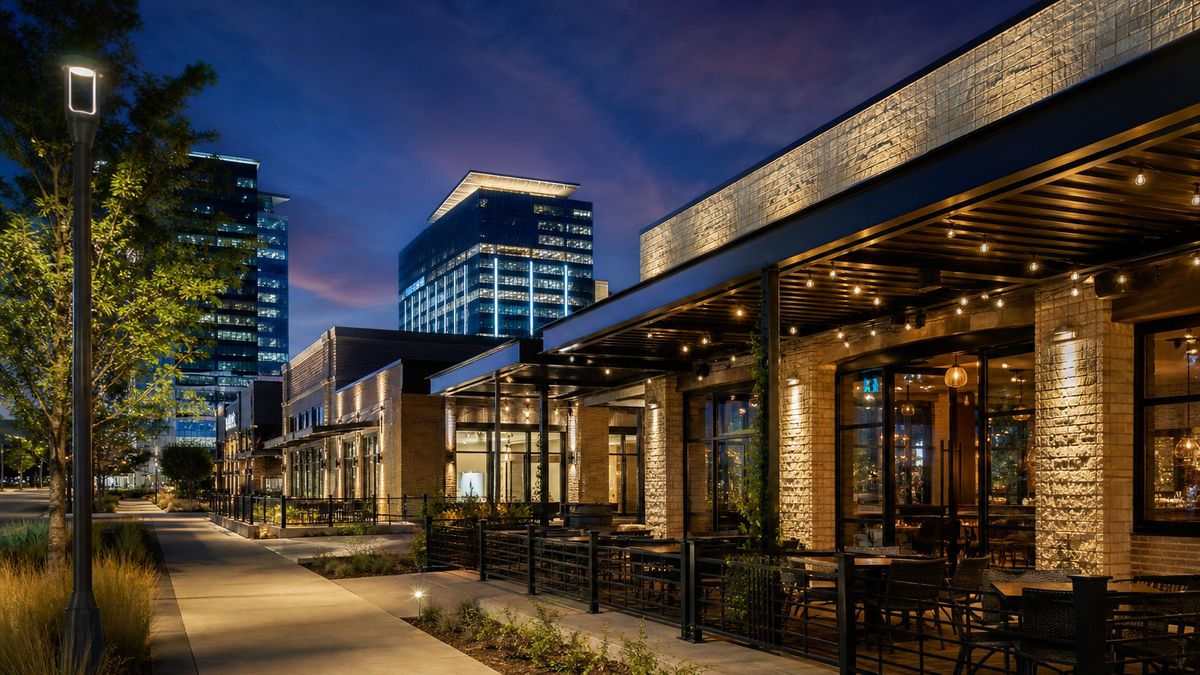
The restaurant experience starts in the parking lot. A dark walkway, a burned-out canopy light or a glaring wall pack undermines everything inside.
- Entry: a welcoming, brighter zone at the door helps guests find the entrance and frames the brand.
- Facade: grazing stone or brick, washing feature walls and lighting architectural details give the building presence at night. RGBW architectural lighting on programmable controls lets a restaurant mark holidays and events. See our guide to commercial holiday lighting in Plano.
- Signage: facade and patio light should support signs rather than compete with them. Our partners at American LED Signage handle channel letters, monument signs and message centers.
- Walkways and parking: even, full-cutoff LED keeps guests and staff safe and reduces glare for neighbors. Our parking lot and garage lighting guide covers this in depth.
- Back doors and service areas: deliveries, trash enclosures and staff exits need reliable light too.
Exterior lighting in Plano should also respect neighbors. Shielded fixtures that keep light on your property and out of nearby windows reduce complaints, especially where restaurants back onto residential streets. Confirm current outdoor lighting and sign requirements with the City of Plano during design.
Lighting controls made for restaurant staff
The best restaurant lighting is easy for a busy manager to run. A wall of unlabeled switches and dimmers leads to rooms left at full brightness at dinner or patios left on all night.
| Control | Where it fits | What it does |
|---|---|---|
| Scene keypads | Dining room, bar, patio | One-touch settings such as Prep, Lunch, Dinner, Late Night and Clean |
| Time-based scenes | Dining room and bar | Shift scenes automatically as the day goes on |
| Astronomical time clocks | Patios, facade, signs, parking | Turn exterior lights on and off with sunset and sunrise |
| Photocells | Exterior lighting | Respond to real daylight, storms and early dusk |
| Occupancy sensors | Storage, offices, restrooms, walk-ins | Lights run only when someone is there |
| App or tablet control | Multi-zone venues and private rooms | Adjust zones from the floor, lock out unwanted changes |
| Networked control | Multi-unit operators | Consistent scenes and schedules across locations |
Scenes should be simple, labeled and protected so a well-meaning server cannot push the dining room back to full brightness at 8 p.m. Commercial energy codes may also require certain controls when lighting is replaced or a space is remodeled, depending on the code edition the City of Plano enforces and the scope of work. We go deeper on controls in our lighting controls guide, and the same scene thinking applies to private dining rooms covered in our meeting room lighting guide.
Private dining, event spaces and video
Private dining rooms and event spaces host business dinners, rehearsal dinners, presentations and watch parties. They need flexible scenes: bright for setup and presentations, warm and low for dinner, and balanced front light if speeches or video are involved. For restaurants and venues that want a screen or a feature wall, see our LED video wall buyer's guide, which covers viewing distance, brightness and placement in dining spaces.
Planning a restaurant lighting upgrade without losing service
Restaurants cannot close for weeks, and most cannot close at all. A well-planned project works around service.
- Evening walkthrough: see the space during real service hours, inside and out, and note glare, dark spots, failed fixtures and color mismatches.
- Concept and goals: agree on the feel for each zone, color temperature, scenes and fixture appearance, and any brand standards.
- Inventory and electrical check: document fixture types, circuits, dimmers and the condition of exterior wiring.
- Mockup: install a few sample fixtures on one section or table group so owners and managers see the result after dark.
- Proposal and phasing: a project-specific proposal that splits the work into exterior, patio, dining room, bar and back-of-house phases.
- Incentive check: many commercial LED upgrades in the Oncor service area may qualify for energy-efficiency incentive programs, depending on the project and program availability. Most programs require approval before work starts.
- Off-hours installation: early morning before prep, between lunch and dinner where possible, after close, or on a planned closed day.
- Programming and commissioning: set and label scenes, time clocks and photocells, then check every zone during a real dinner service.
- Documentation and service: fixture schedules, spare parts list and a simple guide for managers so the lighting stays right after the installers leave.
For a closer look at how professional projects run, see our guide to commercial LED lighting installation in Plano and our comparison of LED tubes, retrofit kits and new fixtures.
Owner vs tenant: who lights what?
Most Plano restaurants lease space in a shopping center, mixed-use district or pad site, so responsibility is split by the lease:
- Landlord: parking and site poles, common walkways, canopies and soffits, shared plazas and often the base building facade.
- Restaurant tenant: interior lighting, bar and kitchen, patio lighting within the leased area, storefront and window lighting, and the tenant's own signs.
Coordinating both sides keeps a center consistent and avoids mismatched color between a tenant's warm patio and the landlord's cool canopy lights. We work with owners, property managers, operators, franchisees, designers and general contractors. For the landlord side, see our shopping center and retail lighting guide.
Restaurant lighting around Collin County
Plano's dining scene runs from corporate lunch traffic around Legacy and Granite Park to evening crowds on Downtown Plano's 15th Street and neighborhood restaurants across the city. Each setting has its own lighting priorities: fast, bright lunch service near offices, a walkable after-dark experience in mixed-use districts, and historic storefronts downtown where fixtures should respect the architecture. We serve restaurants throughout Plano and nearby cities, covered in our Frisco, Allen and McKinney commercial lighting guide, as well as luxury dining and retail in the Park Cities described in our Highland Park business lighting guide and lakeside patios in our Highland Village and Lake Dallas guide.
What drives the cost of restaurant and patio lighting
Every restaurant is different, so we price each project individually after a walkthrough. The main factors are:
- Scope: patio only, exterior, dining room and bar, or the whole restaurant
- Retrofit vs new fixtures: reusing housings and circuits versus replacing them
- Fixture quality: color rendering, dimming performance, flicker and finish
- Outdoor structures: catenary cables, poles, pergola wiring and mounting
- Controls: simple dimmers through scene keypads and networked systems
- Electrical condition: aging circuits, outdoor wiring and code items
- Schedule: off-hours and phased work around service
You receive a written, project-specific proposal before work begins. For sourcing, our network also includes wholesale LED components.
Questions to ask before you hire
- Will you visit during evening service to see the space as guests do?
- What CRI, R9 and flicker performance do the specified fixtures have?
- Will the fixtures dim smoothly to low levels with the dimmers you specify?
- Are the patio fixtures, strings and drivers rated for wet locations and Texas heat?
- Can we see a mockup before the full installation?
- How will installation be scheduled around prep and service?
- Who programs and labels the scenes, and will you train our managers?
- Which fixtures and drivers are specified, and what warranties do they carry?
- Who handles service after the project is finished?
Plano LED Lights brings 15+ years as an authorized architectural lighting dealer and project coordinator. Our licensed installation partner has completed over 200 major sports and commercial projects across the US and Canada — NFL, NBA, NHL, MLS, NCAA and NASCAR. We handle design, supply, installation, programming and service with one accountable team. Learn more about our retail and hospitality lighting services, our architectural lighting, or full design-build projects through the Luminance program.
Frequently Asked Questions
What is the best lighting for a restaurant?
What color temperature should restaurant lighting be?
How do you light a restaurant patio?
Are LED string lights good for commercial patios?
Why does food look bad under some LED lights?
Can restaurant lighting be upgraded without closing?
What lighting controls does a restaurant need?
Do restaurant lighting upgrades qualify for incentives in Plano?
How much does restaurant and patio lighting cost?
What areas do you serve?
Make every table the best seat in the house
Request a consultation and we will follow up to schedule an evening walkthrough of your restaurant or patio.
Related
Our DFW lighting network: Dallas commercial LED lighting, Fort Worth LED lighting, Arlington LED lighting, Irving LED lighting, statewide Texas LED lighting, wholesale LED components, fiber optic starlight ceilings, 360° fiber optic lighting, premium pool lighting, modular building solutions, and Dallas modular structures. Browse more guides on the Plano LED Lights blog.