Warehouse & Flex Space LED Lighting in Plano & Collin County: High Bays, Aisle Controls, Docks & Yards
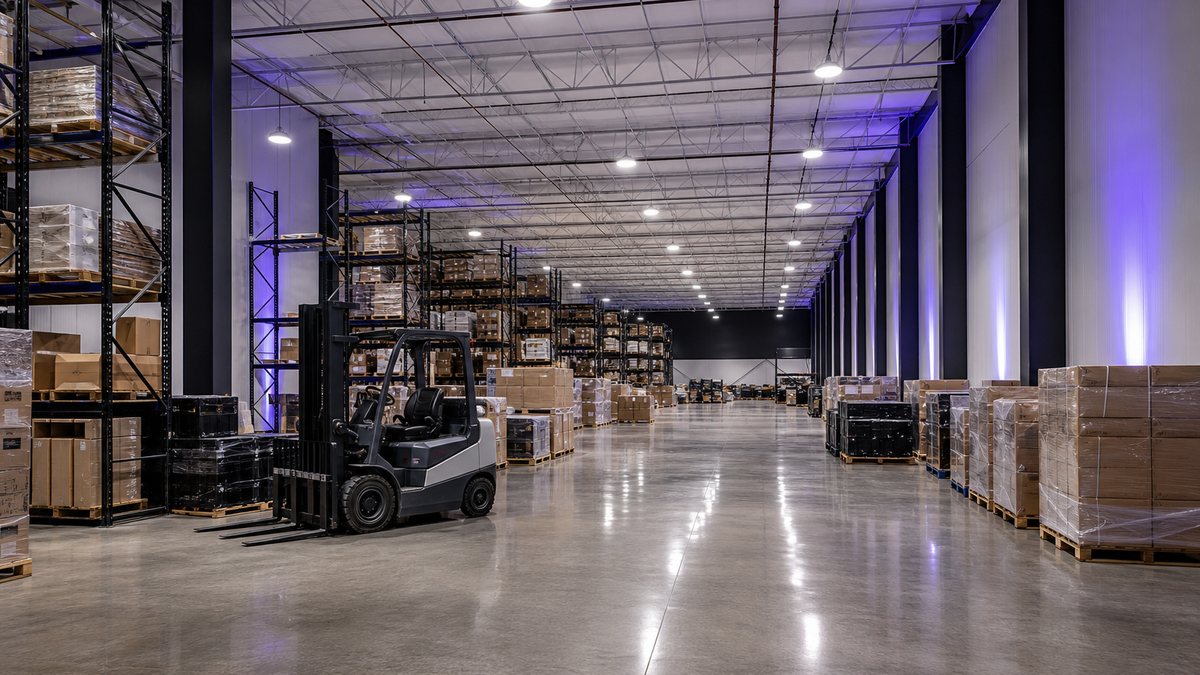
Warehouse and flex space LED lighting in Plano and Collin County has a simple job description and a demanding workload: light tall racks, wide open floors, loading docks and truck yards evenly enough for people and forklifts to work safely, for long hours, in buildings that often get very hot in a North Texas summer. From the light industrial and flex parks along Plano Parkway, Jupiter Road and the east side of US-75 to newer distribution buildings in Allen, McKinney, Frisco and Wylie, many facilities are still running older metal halide, fluorescent T5 or early-generation LED fixtures that were never designed for how the space is used today.
This guide is for warehouse owners, industrial and flex property managers, operations and facilities leaders, and tenants moving into a new suite. It explains which fixtures fit which ceiling heights, how aisle and occupancy controls work, what to do about heat, dust and sprinklers, how to light docks, yards and the office portion of a flex building, how to phase an upgrade without stopping operations, and what to ask before you hire an industrial LED installer.
Good warehouse and flex space LED lighting matches the fixture and optic to the ceiling height and rack layout, adds sensors so lights run only where people are working, and covers docks, yards and offices as part of one plan.
- Open floors and tall ceilings: LED high bays with wide or medium optics
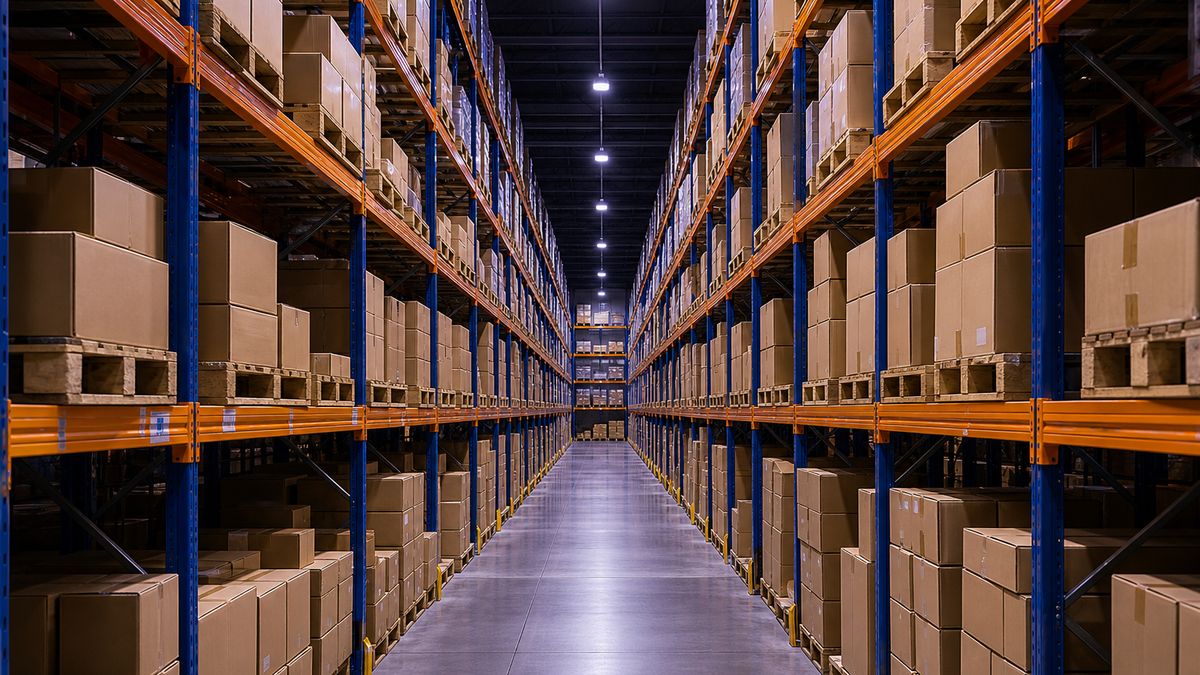
- Racking aisles: linear high bays or narrow aisle optics aimed down the aisle, with occupancy sensors
- Lower ceilings and flex suites: LED low bays, strip or wraparound fixtures
- Hot, dusty or wash-down areas: fixtures rated for the ambient temperature and with sealed, wet-rated housings
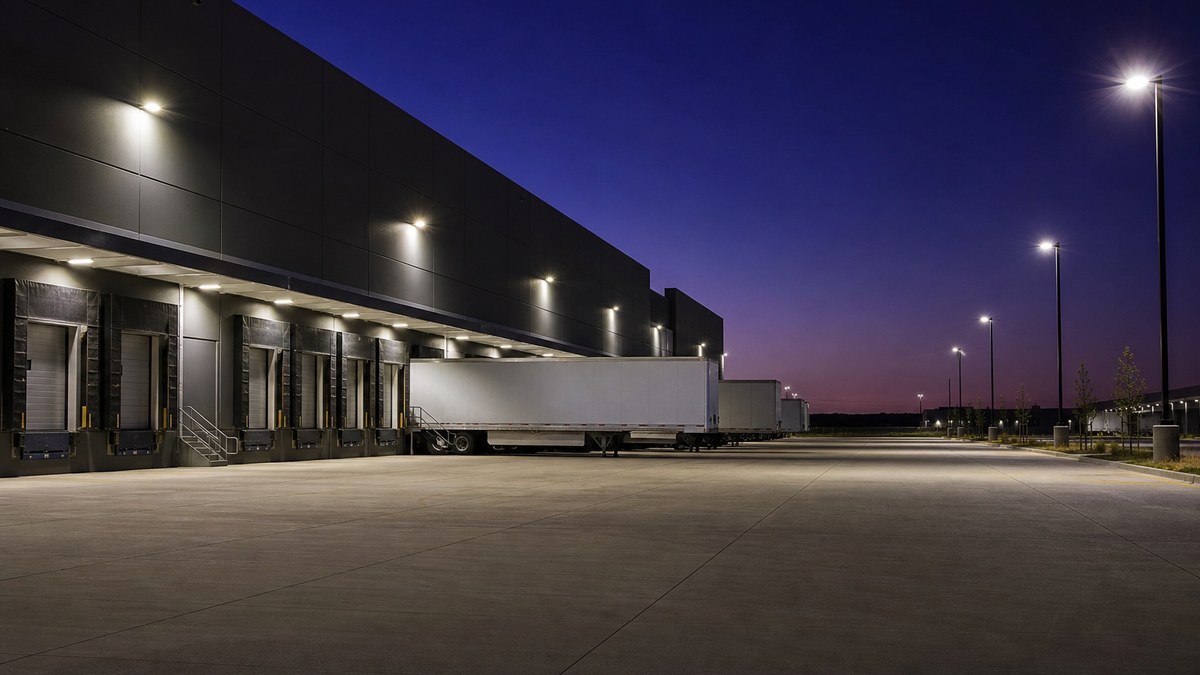
- Docks and yards: dock lights, wall packs and pole-mounted area lights on photocells and schedules
- Safety: emergency and egress lighting checked as part of every project
- Pricing: a project-specific proposal after a site walkthrough
Why warehouse lighting deserves a real plan
In an office, lighting is mostly about comfort. In a warehouse, it is about safety, accuracy and throughput as much as cost. Poor lighting in an industrial building shows up in very practical ways:
- Picking and shipping errors: labels, bin numbers and barcodes are harder to read on upper rack levels and in dark aisle ends.
- Forklift and pedestrian risk: uneven light, glare and deep shadows make it harder to see people, pallets and floor markings.
- Slow restarts: older metal halide fixtures can take minutes to come back on after a power interruption.
- Constant maintenance: failed lamps and ballasts on tall ceilings mean lifts, aisle closures and lost time.
- Lights running in empty space: large buildings often leave every fixture on for a full shift, even in aisles that see a picker only a few times an hour.
- Leasing appeal: a bright, clean, modern-looking space shows better to prospective tenants and buyers.
Collin County's mix of older light industrial buildings and newer flex and distribution product means many owners and tenants are deciding between quick fixes and a full redesign. Our Plano commercial LED guide covers the broader picture; this article focuses on what is different about industrial and flex buildings.
High bay, low bay or linear?
The right fixture depends mostly on mounting height, what sits underneath it and how the floor is used. These are general starting points; a photometric layout confirms the final choice.
| Space | Typical fixture | Optic and layout notes |
|---|---|---|
| High open floors (bulk storage, staging, production) | Round (UFO) or linear LED high bays | Wide or medium distribution for even coverage between fixtures |
| Racking aisles | Linear LED high bays | Narrow or aisle optics oriented down the aisle to light rack faces top to bottom |
| Lower ceilings (many flex suites, mezzanines, older buildings) | LED low bays, strip or wraparound fixtures | Diffused lenses to reduce glare where fixtures are closer to eye level |
| Production and assembly benches | Linear fixtures plus task lighting | Higher light levels and good color rendering where people inspect parts |
| Cold storage and coolers | Sealed LED fixtures rated for low temperatures | Instant-on performance in cold conditions; wet-rated housings |
| Loading docks (interior side) | Linear or high bay fixtures plus dock lights | Light reaching into trailers and over dock plates |
A frequent mistake is replacing old fixtures one for one, in the same positions, with whatever high bay is on sale. Old layouts were designed around the light pattern of the old lamps and often around a racking plan that has changed since. Redesigning the layout, especially around aisles, usually improves visibility more than any single fixture upgrade.
Retrofit kits vs new fixtures
In warehouses, new fixtures are usually the better answer for high bays: old metal halide housings are often heavy, yellowed and hard to seal, and new LED fixtures are lighter and designed around the LED optics. Retrofit kits and LED tubes can make sense for fluorescent strips in offices, restrooms and lower-ceiling areas. Our fixture installation and replacement guide walks through tubes, kits and new fixtures in detail.
Lighting racking aisles the right way
Aisles are where warehouse lighting succeeds or fails. The goal is not just light on the floor, but light on the vertical faces of the racks, so pickers can read labels on the top shelf as easily as the bottom one.
- Fixture placement: center fixtures over aisles rather than over racks, where the light is blocked by product.
- Aisle optics: narrow distributions push light down the aisle and up the rack faces instead of spilling onto the tops of racks.
- Vertical light: ask for vertical illuminance calculations on rack faces, not only horizontal light levels on the floor.
- Aisle ends and cross aisles: forklift traffic crosses here; these zones need consistent light and should not go dark when aisle sensors dim.
- Racking changes: if you plan to reconfigure racks, design the lighting for the future layout, or choose fixtures and mounting that are easy to move.
- Clearances: fixtures must respect sprinkler head clearances and racking heights, which a layout should show before installation.
Controls: where warehouses gain the most
LED fixtures alone use less energy than the lamps they replace, but in warehouses the controls often matter even more, because so much of the floor is empty for much of the shift. LED fixtures also dim and switch instantly, which makes aggressive control strategies practical in a way they never were with metal halide.
| Control | Where it fits | What it does |
|---|---|---|
| Fixture-mounted occupancy sensors | Racking aisles, storage zones | Dim each fixture to a low standby level when its zone is empty and bring it back to full when someone enters |
| Daylight sensors | Areas near skylights, clerestories and dock doors | Reduce output when daylight is enough |
| Schedules and time clocks | Whole building, docks, yards | Match lighting to shifts, weekends and holidays |
| Photocells and astronomical clocks | Wall packs, yard poles, parking | Turn exterior lighting on and off with dusk and dawn |
| High-end trim (tuning) | Open floors with more light than needed | Set the maximum output to the level the task actually needs |
| Wireless networked controls | Larger buildings and multi-building portfolios | Group fixtures, change settings from software, and report faults and usage |
A typical design dims aisles to a standby level rather than switching them fully off, so the space never feels dark and forklift drivers can see ahead. Cross aisles, main travel paths and emergency fixtures stay on. Commercial energy codes also require many of these controls on new installations and major alterations; requirements depend on the code edition the City of Plano or your local city enforces and the scope of work, so confirm them during design. Our office lighting controls guide explains sensors, daylight dimming and networked systems in more depth.
Before you request proposals, walk the building during a normal shift and note which aisles and zones are actually busy. That simple usage map helps your lighting partner set sensor zones and standby levels that fit the way your team works.
Heat, dust and moisture: choosing fixtures for Texas industrial buildings
Many Collin County warehouses and flex bays are not fully air-conditioned, and the air near the roof deck of an uncooled building in July can be far hotter than the floor below. Heat is one of the main things that shortens LED driver life, so fixture selection matters.
- Ambient temperature rating: confirm the fixture is rated for the temperatures at mounting height, not at the thermostat.
- Thermal design: well-designed heat sinks and drivers separated from the LED board help in hot spaces.
- Ingress protection: dusty, wash-down or humid areas call for sealed fixtures with an appropriate IP rating.
- Impact resistance: lower-mounted fixtures in active areas may need guards or impact-rated lenses.
- Surge protection: North Texas storms make surge protection a sensible part of any large lighting system.
- Food and clean areas: food handling and clean production may need fixtures with non-glass lenses and sealed, easy-to-clean housings.
- Listings and qualified products: UL or equivalent listings for the environment, and DesignLights Consortium (DLC) qualified products where an incentive program requires them.
Docks, yards and the building exterior
Exterior lighting is where industrial properties are judged at night by drivers, employees and security staff. It is also where many older buildings have the oldest fixtures.
- Dock lights: articulating LED dock lights help loaders see deep into trailers without stringing temporary lights.
- Dock door and canopy lighting: even light over dock aprons helps drivers back in and keeps the area safe for people on foot.
- Wall packs: full-cutoff LED wall packs replace old glaring fixtures and keep light on the ground instead of in drivers' eyes.
- Truck courts and yards: pole-mounted LED area lights with optics chosen for the yard layout reduce dark gaps between poles.
- Employee parking and walkways: people walking to their cars after a late shift need consistent, glare-free light.
- Neighbors: where industrial land backs onto homes, shielded fixtures and careful aiming limit light trespass.
- Security cameras: uniform light supports camera coverage; coordinate fixture positions with your security provider.
Exterior lighting usually runs on photocells and schedules, with the option to dim yards after hours while keeping security levels. For building signage, monument signs and lit address numbers, our partners at American LED Signage can help.
Planning a warehouse lighting upgrade in Collin County?
Tell us about your building and we will follow up to schedule a walkthrough and a project-specific proposal.
Flex space lighting: office, showroom and warehouse under one roof
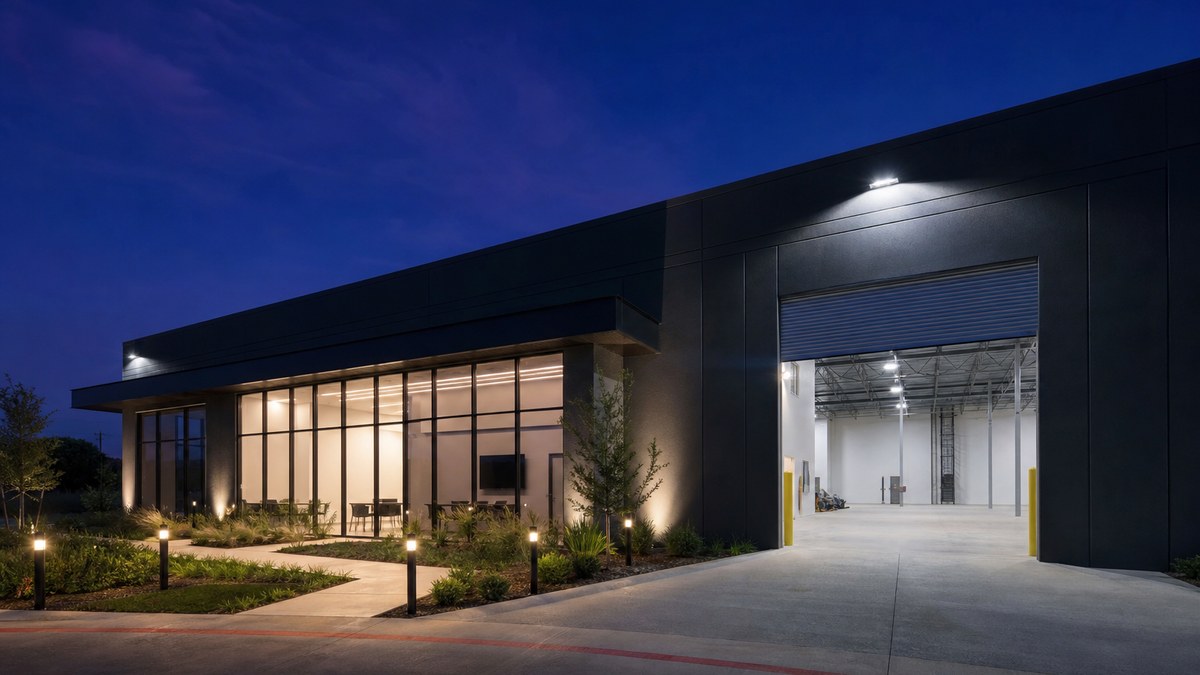
Flex buildings are common across Plano, Richardson, Allen, McKinney and Frisco. A single suite might include a front office, a showroom or lab, and a warehouse or production bay with a grade-level or dock-high door. Each part needs different lighting, and the transitions between them matter.
Front offices and reception
Treat the office portion like any professional workspace: comfortable LED panels or linear fixtures, good color quality, occupancy and daylight controls, and a reception area that makes a good first impression. Our meeting room lighting guide covers conference spaces that often sit inside flex suites.
Showrooms and labs
Showrooms need accent lighting and high color rendering so products look right. Labs, test areas and light assembly need higher, even light levels and flicker-free fixtures. Some tenants add a branded feature wall or an LED video wall in the showroom.
Warehouse and production bays
Lower clear heights in many flex buildings make LED low bays or linear fixtures a better fit than tall-ceiling high bays. Sensors still pay off in storage areas, and the transition from office to warehouse should not be a jump from bright to dim.
Tenant turnover and second-generation space
When a suite turns over, owners often face a mix of fixtures left by previous tenants. Standardizing on one fixture family and color temperature across a building makes suites easier to lease and maintain. For owners adding in-plant offices or on-site buildings, our network also includes modular building solutions.
Emergency and egress lighting are part of the job
Every industrial lighting project should include a look at emergency lighting, because it is easy to break while upgrading everything else. Exit signs and emergency fixtures must keep exit paths lit during a power failure, and many warehouses use emergency battery packs or generator circuits on selected high bays. When fixtures are replaced, those emergency functions need to be carried over, tested and documented. Requirements come from the fire and building codes your city enforces and your fire marshal or inspector, so we confirm them during design rather than assuming.
Planning a warehouse upgrade without stopping operations
Operations teams worry most about disruption. A well-planned project keeps the building running.
- Walkthrough and inventory: document fixture types, mounting heights, circuits, racking, sprinklers, emergency fixtures and problem areas, inside and outside.
- Usage and goals: understand shifts, busy and quiet zones, future racking plans and any special areas such as coolers or production lines.
- Photometric layout: a lighting layout showing fixture positions and expected light levels, including aisle faces.
- Sample fixtures: for larger buildings, install a few fixtures in one aisle or zone so your team can see the result.
- Proposal and phasing: a project-specific proposal that breaks work into zones, docks and exterior phases.
- Incentive check: many commercial LED upgrades in the Oncor service area may qualify for energy-efficiency incentive programs, depending on the project and program availability. Parts of Collin County are served by electric cooperatives rather than Oncor, so check with your utility. Most programs require approval before work starts.
- Installation: zone by zone, often on nights or weekends, coordinating lifts with forklift traffic and inventory moves.
- Commissioning: set sensor zones, standby levels, time delays and schedules, then fine-tune after a few weeks of real use.
- Documentation and service: fixture schedules, control settings, warranty information and a maintenance plan.
For more on what a professional installation looks like and how to compare contractors, read our commercial LED lighting installation guide.
Owner vs tenant: who handles warehouse lighting?
As with retail, responsibility usually follows the lease:
- Owner / landlord: often exterior wall packs, yard and parking poles, building-wide shell lighting and sometimes the base warehouse lighting in a speculative building.
- Tenant: often lighting changes inside the suite, office build-out, racking-specific lighting and controls tied to their operation.
Because leases vary, it is worth confirming responsibility before planning. When an owner upgrades a whole building, offering tenants the same fixture standards keeps the property consistent. We work with owners, property managers, brokers, tenants and general contractors. You can also see how we approach multi-city projects in our Frisco, Allen and McKinney guide.
What drives the cost of warehouse lighting projects
Every building is different, so Plano LED Lights prices each project individually after a walkthrough. The main factors are:
- Building size and mounting heights: taller ceilings mean larger lifts and more labor per fixture
- Fixture type and quality: optics, thermal rating, sealing and driver quality
- Controls: simple sensors and schedules through wireless networked systems
- Layout changes: relocating fixtures for aisles versus one-for-one replacement
- Electrical condition: circuit capacity, aging wiring and code items found during the walkthrough
- Exterior scope: docks, wall packs, yard poles and parking
- Access and scheduling: racking, inventory, night or weekend work and coordination with operations
You receive a written, project-specific proposal before any work begins. For sourcing, our network also includes wholesale LED components.
Questions to ask an industrial LED installer
- Will you provide a photometric layout, including vertical light on rack faces?
- Are the fixtures rated for the temperature at mounting height in our building?
- How will sensor zones, standby levels and time delays be set, and who fine-tunes them later?
- How will you keep emergency and egress lighting working and documented?
- How will work be phased around shifts, forklift traffic and inventory?
- Which fixtures, drivers and controls are specified, and what warranties do they carry?
- Will you check incentive eligibility before work starts?
- Who services the system after the project is finished?
Plano LED Lights brings 15+ years as an authorized architectural lighting dealer and project coordinator. Our licensed installation partner has completed over 200 major sports and commercial projects across the US and Canada — NFL, NBA, NHL, MLS, NCAA and NASCAR. We handle design, supply, installation, programming and service with one accountable team. Learn more on our commercial lighting services page, our service and maintenance options, or about full design-build projects through the Luminance program. See the cities we cover on our service areas list.
Frequently Asked Questions
What is the best LED lighting for a warehouse?
What is the difference between high bay and low bay lighting?
How should racking aisles be lit?
Do occupancy sensors work with forklifts?
Can LED fixtures handle a hot, non-air-conditioned warehouse?
Should I use retrofit kits or new high bay fixtures?
Can a warehouse upgrade happen without shutting down operations?
Do warehouse LED upgrades qualify for incentives in Collin County?
How much does warehouse LED lighting cost?
What areas do you serve?
Brighter aisles, safer docks
Request a consultation and we will follow up to schedule a walkthrough of your warehouse or flex building. Prefer to pick a time? Schedule a meeting.
Related
More from our blog: corporate campus lighting in Legacy, shopping center and retail lighting, and Highland Village and Lake Dallas business lighting. Browse every guide on the Plano LED Lights blog or see all our services.
Our DFW lighting network: Dallas commercial LED lighting, Fort Worth LED lighting, Arlington LED lighting, Irving LED lighting, statewide Texas LED lighting, wholesale LED components, fiber optic starlight ceilings, 360° fiber optic lighting, premium pool lighting, modular building solutions, and Dallas modular structures.