Recessed Lighting & LED Downlight Installation in Plano, TX: A Commercial Guide for Offices, Retail, Restaurants, Lobbies & Clinics
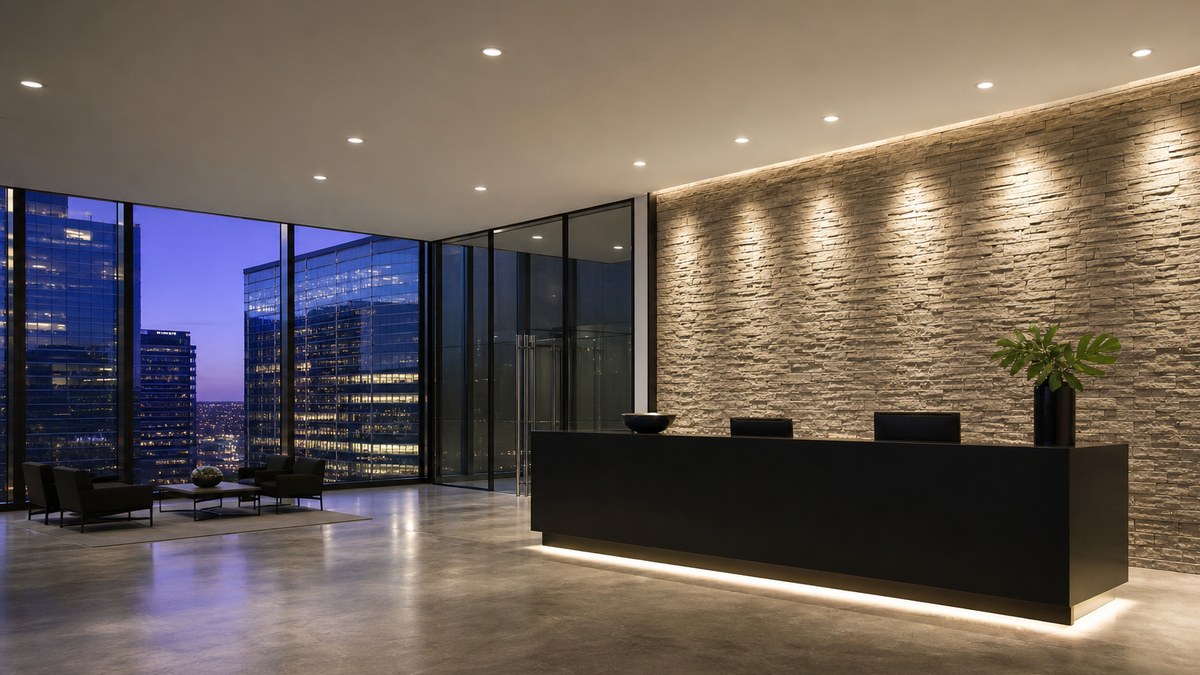
Recessed lighting installation in Plano is one of the most common requests we get from businesses, and one of the easiest to get wrong. A row of LED downlights looks simple from below, but the choices behind it decide whether a lobby feels premium or flat, whether a conference room is comfortable on video calls, whether merchandise looks true to color, and whether the ceiling will still look consistent years from now when a driver fails and someone has to replace it.
This guide is written for office managers, property managers, retail and restaurant operators, clinic owners, architects and general contractors in Plano, Legacy, Granite Park, Downtown Plano and the rest of Collin County, including Frisco, Allen, McKinney, Richardson and Highland Village. It explains the main types of commercial recessed lights and downlights, how to choose color, brightness, beam and glare control for each space, when to retrofit existing cans versus install new fixtures, what changes in grid, drywall and fire-rated ceilings, how dimming and controls fit in, and how a professional installation runs without shutting your business down.
Commercial recessed lighting installation means choosing the right LED downlight for each space and ceiling, laying it out for even, glare-free light, and installing it to code with controls that fit how the space is used.
- Fixture types: new-construction or remodel housings, LED retrofit kits for existing cans, slim downlights, adjustable and wall-wash trims, and cylinders where there is no plenum space
- Color: 2700K–3000K for hospitality and lobbies, 3000K–3500K for retail and most offices, 3500K–4000K for task-heavy areas; 90+ CRI where color matters
- Glare: deeper regressed optics, low-glare reflectors and the right beam angle keep light off screens and eyes
- Layout: spacing is set by ceiling height, beam spread and the task, with walls lit to make rooms feel larger
- Controls: dimming (0–10V, phase or digital), occupancy sensors and scenes, matched to driver type and local energy code
- Installation: after-hours and phased so offices, stores and restaurants stay open
- Pricing: quote-only, a project-specific proposal after a site walk
What counts as commercial recessed lighting?
Recessed lighting is any fixture mounted above the ceiling plane so the light source sits flush with, or slightly above, the finished ceiling. In homes people often call them "can lights" or "pot lights." In commercial interiors the category is broader and the stakes are higher, because fixtures run longer hours, ceilings are more complex and the lighting has to support work, sales, safety and brand at the same time.
The most common commercial recessed families are:
- LED downlights: round or square apertures that send light straight down. The workhorse of lobbies, corridors, restrooms, retail, restaurants and private offices.
- Adjustable (accent) downlights: the optic tilts and rotates so you can aim light at art, displays, menu boards or feature walls.
- Wall-wash downlights: an asymmetric optic spreads light evenly down a wall. Bright walls make rooms feel larger and reduce the "cave" effect of downlights alone.
- Recessed troffers and panels: 2x2, 2x4 and 1x4 fixtures that drop into a grid ceiling, the standard for open offices and classrooms. We cover them in our light fixture installation and replacement guide.
- Recessed linear (slot) lighting: narrow continuous lines in drywall or grid that give a modern, architectural look in lobbies, corridors and conference rooms.
This article focuses on downlights, adjustable accents, wall washers and their trims, because those are the fixtures most people mean when they search for recessed lighting installation. They also make the biggest difference to how a finished commercial interior looks.
Types of LED downlights and when each fits
Most of the decision comes down to two questions: what kind of ceiling do you have, and is there an existing fixture you can reuse?
| Type | Best for | Things to know |
|---|---|---|
| New-construction housing | Build-outs and renovations with open ceilings | Mounts to framing or grid with bar hangers before the ceiling closes; widest choice of optics and trims |
| Remodel housing | Adding lights to existing drywall ceilings | Installs through the ceiling cutout and clamps to the drywall; check depth and clearance above |
| LED retrofit kit | Replacing old incandescent, halogen or CFL cans | Fits into the existing housing; must be listed for retrofit use and matched to the can size and driver needs |
| Slim / shallow downlight | Ceilings with little plenum depth, ducts or joists in the way | Driver in a remote junction box; good where a full housing will not fit |
| Modular "trim-from-below" downlight | Premium lobbies, retail and hospitality | Optics, trims and sometimes drivers change from below the ceiling without opening it up |
| Surface or pendant cylinder | Exposed or concrete ceilings, high open spaces | Not recessed, but gives the same downlight effect where recessing is impossible |
Serviceability is worth extra attention. A recessed fixture that can be maintained from below, with a replaceable driver and LED module, is far easier to keep running than one that requires cutting drywall or lifting tiles in a finished lobby. Ask about it before you choose a fixture, not after the first failure.
Choosing color, brightness and glare control
Color temperature (CCT)
Color temperature sets the mood of the room. Warmer light (2700K–3000K) feels relaxed and residential; neutral light (3500K–4000K) feels crisp and alert. Most Plano offices settle around 3500K, restaurants and hotel-style lobbies around 2700K–3000K, and retail somewhere between depending on the brand and products. Mixing color temperatures in the same space is one of the most common reasons a ceiling looks "off," so pick one standard per area and stick to it. Many commercial downlights now offer field-selectable CCT, which helps when you want to test options on site before committing.
Color rendering (CRI and R9)
CRI describes how naturally a light source shows colors. For lobbies, retail, restaurants, salons, clinics and conference rooms used for video calls, 90+ CRI is a sensible baseline. Check R9 too: it measures how saturated reds render, which affects skin tones, wood finishes, food and fabrics. Cheaper downlights sometimes meet a headline CRI number with weak R9, and the result is dull, grayish skin tones on camera and in mirrors.
Brightness and light levels
Lumen output matters less than where the light lands. The right target depends on the task: a reception desk, a pharmacy counter and an exam room need more light than a hallway or a lounge. Recommended light levels come from industry guidance such as the Illuminating Engineering Society, and your designer should check them with a lighting calculation rather than guessing. Over-lighting is as common as under-lighting, especially when old fixtures are replaced one-for-one with much brighter LEDs.
Beam angle and glare
Downlights come with narrow, medium and wide beam options. Narrow beams create pools of light for drama and accents; wide beams give general coverage with fewer fixtures. Glare is controlled by how deep the light source sits in the fixture (regressed optics), the reflector design and the trim finish. In offices and conference rooms, low-glare optics keep bright spots out of people's eyes and off screens. Many manufacturers publish a Unified Glare Rating (UGR) for their fixtures, which is useful for comparing options in workspaces.
Flicker and dimming quality
Poor drivers can cause visible flicker, stroboscopic effects on camera and buzzing in dimmed rooms. For video-heavy spaces, specify drivers designed for low flicker and confirm the fixture's dimming range and how smoothly it dims to low levels. Our meeting and conference room lighting guide goes deeper into lighting for cameras.
Recessed lighting by type of space
| Space | Typical approach | Key details |
|---|---|---|
| Office lobby and reception | Downlights plus wall washers and accents on signage walls or art | Warm-to-neutral color, high CRI, lit vertical surfaces for first impressions |
| Private offices | Low-glare downlights or recessed linear | Comfort on screens, dimming, occupancy sensors |
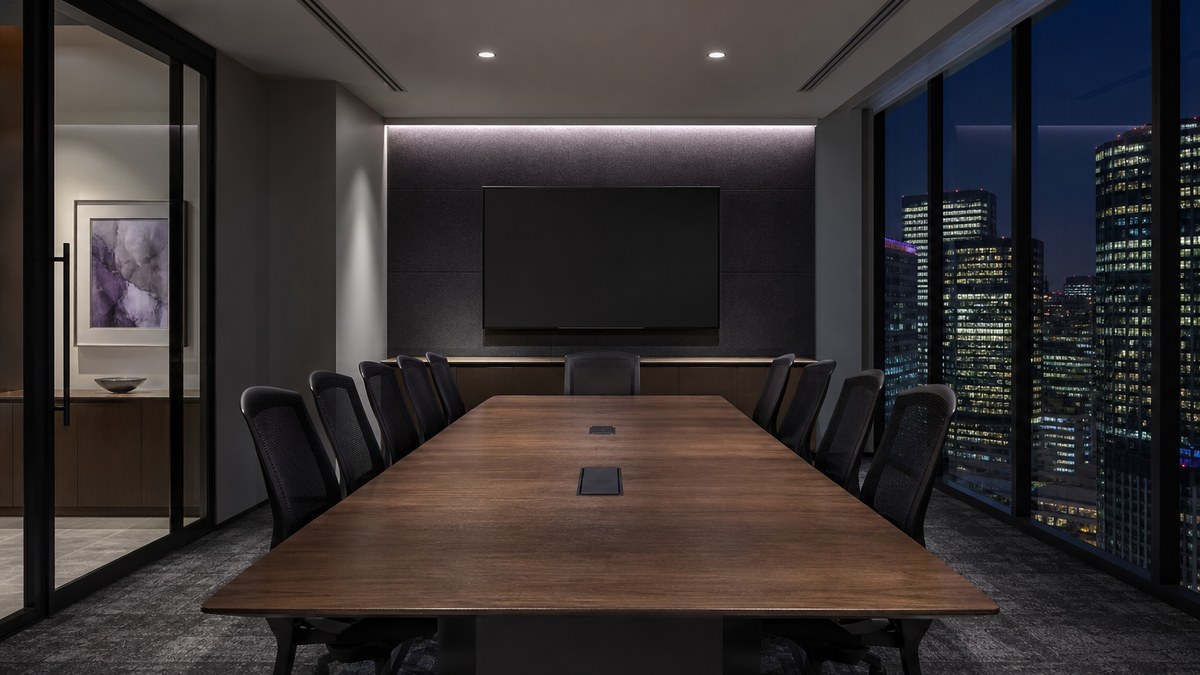
| Conference rooms | Downlights for the table, wall washers for the presentation and camera walls | Scenes for meetings, video and presentations |
| Corridors | Evenly spaced downlights or linear slots | Consistent spacing, occupancy-based dimming, emergency egress fixtures |
| Retail sales floor | General downlights plus adjustable accents | Re-aimable optics so merchandisers can follow floor changes |
| Restaurants and bars | Warm dimmable downlights and narrow-beam accents on tables | Smooth low-end dimming, scene control for day and night |
| Medical and dental clinics | High-CRI downlights and troffers | Accurate skin tones, cleanable trims, flicker-free drivers |
| Restrooms | Downlights plus mirror lighting | Damp-location ratings where needed, sensors |
Offices and corporate interiors
In Legacy and Granite Park office space, downlights usually handle lobbies, corridors, break rooms, restrooms and executive offices, while open offices rely on troffers or linear fixtures. The best results come from treating walls as part of the lighting design: a lit wall at the end of a corridor or behind a reception desk does more for the space than doubling the number of downlights. See our corporate campus lighting guide for lobbies, garages and grounds.
Retail and showrooms
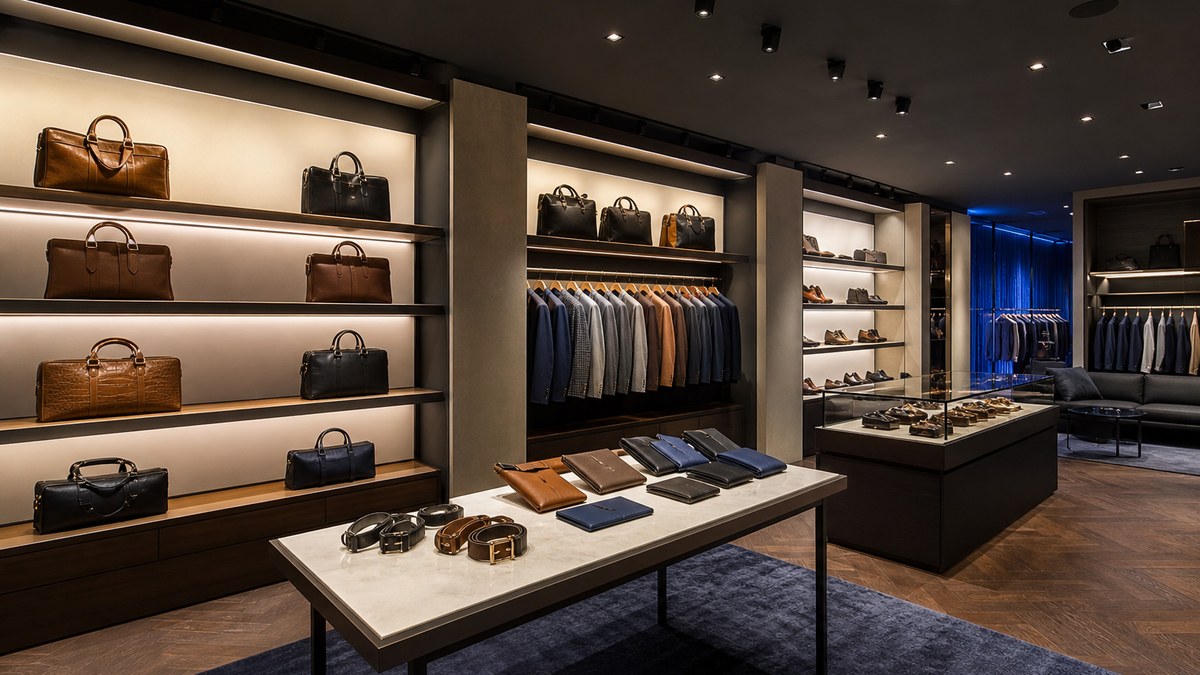
Retail needs flexibility. Fixed downlights provide ambient light, and adjustable recessed accents let staff re-aim light when displays move. Clean, consistent apertures across the ceiling help a store feel premium. Our shopping center and retail lighting guide covers sales floors, storefronts and parking together.
Restaurants, bars and hospitality
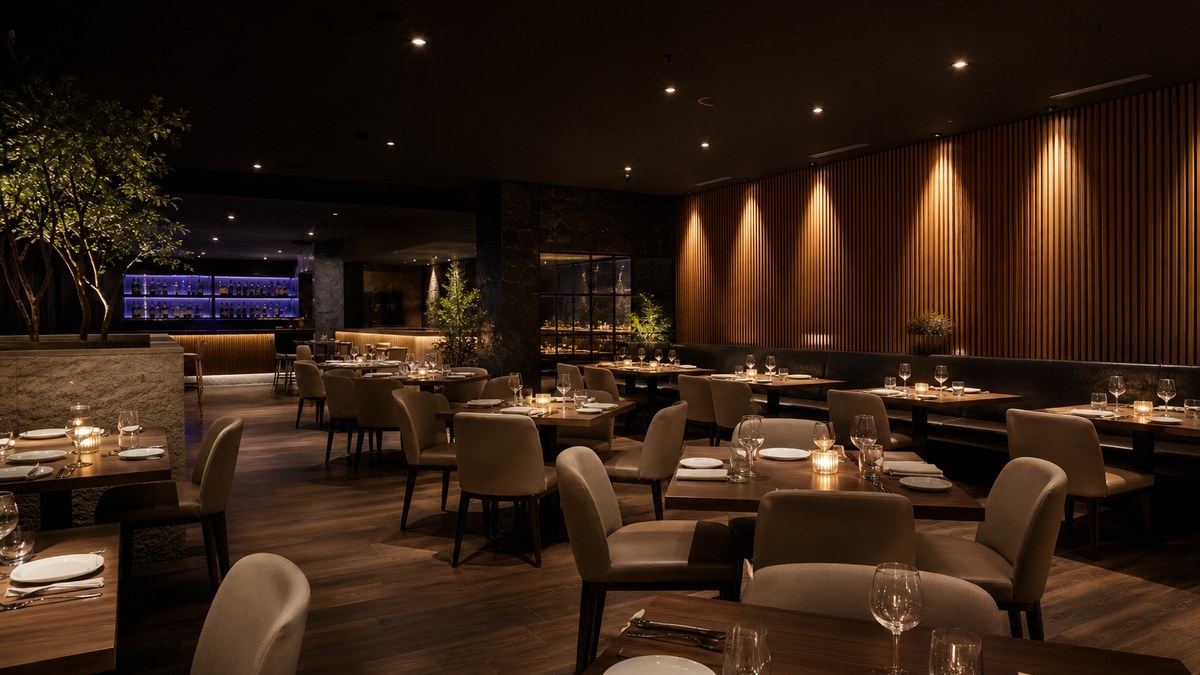
Dining rooms need warm light that dims smoothly to low levels without flicker or color shift, plus narrow beams that put light on tables rather than faces. Pair recessed lighting with decorative pendants and indirect coves for a layered look. Read more in our restaurant and patio lighting guide. For a signature ceiling feature, our network also offers fiber optic starlight ceilings.
Clinics, salons and wellness spaces
Exam rooms, treatment rooms and salon stations need high-CRI light so skin tones, hair color and materials look accurate, plus comfortable waiting areas. Trims and lenses should be easy to clean.
Planning recessed lighting for your Plano space?
Tell us about the space, the ceiling and your timeline, and we will follow up to schedule a site walk and prepare a project-specific proposal.
Retrofit existing cans or install new fixtures?
Many Plano buildings still have older recessed cans with CFL, halogen or incandescent lamps. You have three main paths:
- Screw-in LED lamps: the quickest change, but the old housing, socket and trim stay. Light quality, glare control and dimming performance are limited, and heat inside a closed can shortens lamp life. Fine for a stopgap, rarely the best long-term answer for a business.
- LED retrofit kits: a new LED module, driver and trim that fit into the existing housing. A good middle ground when the housings are in good condition and the layout works. The kit must be listed for use as a retrofit and compatible with the housing size.
- New fixtures: remove the old cans and install new LED downlights. Best when the layout is wrong, housings are failing, the ceiling is being replaced, or you want premium optics, wall washers or below-ceiling serviceability.
| Question | Leans toward retrofit kit | Leans toward new fixtures |
|---|---|---|
| Is the current layout working? | Yes, spacing and positions are fine | No, dark spots, glare or poor wall light |
| Condition of housings and wiring | Sound and accessible | Damaged, obsolete or unsafe |
| Ceiling work planned? | No, minimal disruption wanted | Yes, ceiling is open or being replaced |
| Design goals | Better efficiency and color in the same look | New look, accents, wall washing, slimmer apertures |
| Controls | Basic dimming or sensors | Networked controls, scenes, tunable white |
A short site walk usually makes the decision obvious. We often recommend a mix: retrofit kits in back-of-house areas where the layout works, and new fixtures in lobbies, conference rooms and customer-facing spaces where appearance matters most.
Ceilings, codes and installation details
Grid (T-bar) ceilings
Acoustic tile ceilings are the easiest place to add or relocate downlights. Fixtures mount in the tile with support from the grid or the structure above, and wiring runs in the plenum. Fixture weight, seismic and support requirements, and whether the plenum is used for return air all affect which products and wiring methods are allowed.
Drywall (hard-lid) ceilings
Lobbies, restaurants and executive spaces often have drywall ceilings. Adding lights means careful cutouts, checking for framing, ducts, sprinkler lines and other services above, and patching and painting afterward. Remodel housings and slim downlights solve many access problems, and modular trim-from-below fixtures make future maintenance much easier.
Fire-rated and plenum ceilings
Some commercial ceilings are part of a fire-rated assembly or serve as an air-handling plenum. Recessed fixtures in these ceilings may need specific ratings, enclosures or installation methods, and the details belong in the design, not on the ladder. A licensed electrician and the project's design professional confirm what applies.
Energy code and permits
New installations and major alterations in commercial spaces have to meet the commercial energy code: limits on installed lighting power and requirements for controls such as occupancy sensing, automatic shutoff and dimming. Requirements depend on the code edition the City of Plano enforces and the scope of work, so they are confirmed during design. Larger projects may also need a permit and inspection. We cover controls requirements in more depth in our office lighting controls guide.
Emergency and egress lighting
Some downlights in corridors, stairs and exit paths may need to stay on during a power outage. That is usually handled with emergency battery drivers in selected fixtures or with a central emergency system. Changing fixtures is a good time to verify that egress lighting still covers the path it needs to.
Dimming and controls for recessed lighting
LED downlights are only as good as the controls behind them. Matching the driver to the control system is the step most often missed on small projects, and it is the usual cause of flicker, buzzing and lights that will not dim low enough.
- 0–10V dimming: the most common commercial method. Needs separate low-voltage control wiring to each fixture or zone.
- Phase dimming (forward or reverse): uses existing line-voltage wiring and wall dimmers. Convenient for retrofits, but driver and dimmer must be tested together.
- Digital (DALI and similar): each fixture or group is addressable, which suits scenes, flexible zoning and larger buildings.
- Wireless and networked controls: sensors and switches that communicate without new control wiring, useful in finished spaces where pulling wire is disruptive.
- Occupancy and vacancy sensors: turn lights off or down in restrooms, private offices, storage and corridors when nobody is there.
- Daylight dimming: lowers downlights near windows when daylight is enough.
- Scene control: one-touch settings for meetings, presentations, dining service or after-hours cleaning.
- Tunable white: shifts color temperature through the day, used in some offices, healthcare and hospitality spaces.
Layout basics: spacing, walls and consistency
A good recessed layout is planned, not eyeballed. A few principles make a large difference:
- Start with the task: place light where people work, read, sit and shop, then fill in general light.
- Light the walls: keep downlights a sensible distance from walls to avoid harsh scallops, or use wall-wash trims to light the wall evenly.
- Align with architecture: line fixtures up with ceiling grids, walls, millwork and furniture so the ceiling looks intentional.
- Mind ceiling height: higher ceilings need more output and usually narrower beams to deliver the same light to the floor.
- Keep apertures consistent: one aperture size, shape and trim finish per space looks far cleaner than a mix.
- Avoid the "Swiss cheese" ceiling: more downlights are not always better. Fewer, better-placed fixtures with good optics usually look more premium.
- Check with a calculation: lighting software confirms light levels and uniformity before anything is ordered.
How a professional recessed lighting project runs in Plano
- Site walk and inventory: fixtures, ceilings, access above, circuits, existing controls and how each space is used.
- Goals and standards: color temperature, CRI, appearance and control approach, agreed with owners, tenants or designers.
- Fixture selection and layout: retrofit kits versus new fixtures by area, with a lighting calculation where needed.
- Mockup: a few sample fixtures installed in one room so stakeholders see color, brightness and glare before the full order.
- Project-specific proposal: scope, phasing, schedule and fixture list in writing.
- Incentive check: Plano is in the Oncor service area, and qualifying LED and controls upgrades may qualify for energy-efficiency incentive programs depending on program availability. Most programs require approval before work starts.
- After-hours, phased installation: evenings, nights or weekends, one area at a time, with clean-up so the space is ready for business the next morning.
- Programming and commissioning: dimming ranges, sensors, scenes and schedules set up and tested.
- Close-out: fixture schedules, product documentation and a service plan so future replacements match.
What drives the cost of recessed lighting projects
Plano LED Lights is quote-only, because no two ceilings are the same. Every project receives a written, project-specific proposal after a site walk. The main factors are:
- Number and type of fixtures: retrofit kits, new housings, slim downlights, adjustable accents or wall washers
- Fixture quality: optics, glare control, color rendering, dimming performance and serviceability
- Ceiling type and access: grid versus drywall, ceiling height, obstructions above and patching
- Electrical work: new circuits, control wiring, emergency drivers and code updates
- Controls: simple dimmers through networked systems with sensors and scenes
- Schedule: after-hours and phased work around business hours
- Design support: layouts, calculations and mockups
For full interior transformations that combine lighting design, fixtures and installation, see our Luminance design-build program or our architectural lighting services.
Questions to ask before you hire
- Will you walk the space and check the ceiling and access above before quoting?
- Do you recommend retrofit kits or new fixtures for each area, and why?
- What CRI, R9, color consistency and glare control do the specified downlights have?
- Which drivers and dimming method are specified, and have they been tested with our controls?
- Can the LED module and driver be serviced from below the ceiling?
- Can we see a mockup before the full order?
- How will installation be phased around our business hours?
- Who handles permits, emergency lighting and programming?
- Which fixtures and drivers are specified, and what manufacturer warranties apply?
Plano LED Lights brings 15+ years as an authorized architectural lighting dealer and project coordinator. Our licensed installation partner has completed over 200 major sports and commercial projects across the US and Canada — NFL, NBA, NHL, MLS, NCAA and NASCAR. We coordinate design, supply, installation, programming and service with one accountable team. If you are still comparing contractors, our guide to choosing commercial LED installers in Plano covers what a professional project looks like, and our business lighting services page covers retrofits, controls and repairs.
Frequently Asked Questions
Who installs recessed lighting for businesses in Plano, TX?
Should I use LED retrofit kits or replace my recessed cans?
What color temperature is best for commercial recessed lighting?
What CRI should commercial downlights have?
How do you reduce glare from recessed lights?
Can recessed lighting be installed without closing my business?
Why do my LED recessed lights flicker or buzz when dimmed?
Do I need a permit for commercial recessed lighting in Plano?
Do recessed LED upgrades qualify for incentives in Plano?
How much does commercial recessed lighting installation cost?
Better ceilings, better spaces
Request a consultation for recessed and downlight lighting in Plano, Legacy, Frisco, Allen, McKinney, Richardson or Highland Village, or schedule a meeting.
Related
More from our blog: storefront window and canopy lighting, commercial LED lighting in Frisco, Allen and McKinney, business lighting in Highland Village and Lake Dallas, Highland Park retail lighting, warehouse and flex space lighting and LED video walls. Browse every guide on the blog or see our full commercial lighting services.
Our DFW lighting network: Dallas commercial LED lighting, Fort Worth LED lighting, Arlington LED lighting, Irving LED lighting, statewide Texas LED lighting, wholesale LED components, fiber optic starlight ceilings, 360° fiber optic lighting, premium pool lighting, modular building solutions, Dallas modular structures and American LED Signage.